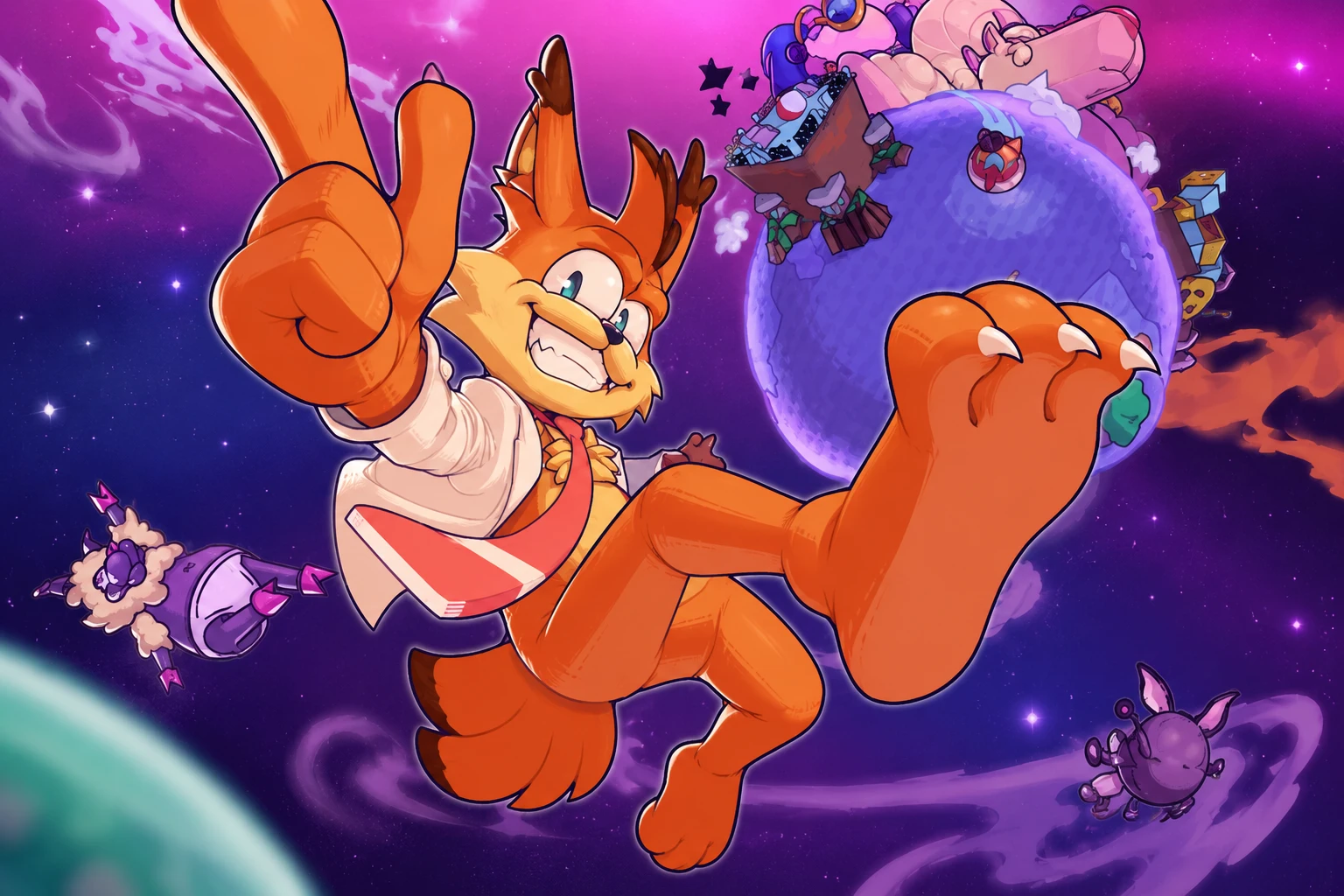

During the 1990s, a hyperactive feline named Bubsy challenged industry icons like Mario and Sonic. Although his original games rarely matched the quality of his peers, the mascot’s comical persona left a lasting impression, surviving through internet memes. This enduring appeal makes the ambitious energy of his latest title, Bubsy 4D, admirable. The game recaptures the fast-paced reputation of classic platformers, channeling that spirit into a compact, meta-aware redemption story that gives the character his due.
Operating as a tongue-in-cheek parody and a genuine legacy sequel, Bubsy 4D follows the washed-up mascot as he clumsily attempts a comeback. He is reluctantly forced to protect the galaxy from a dual threat – the returning Woolies and a new robotic enemy faction called the BaaBots. Accompanied by his friends and his Gen-Z-coded niece and nephew, Bubsy must play the hero again. While alternative retro platformers lean entirely into pure nostalgia, this project remains self-deprecating about its franchise’s spotty history without turning mean, delivering a charming portrayal of a down-on-his-luck character.
The title marks a sharp mechanical departure from its historic predecessors.
In practice, Bubsy 4D mirrors the traditional structure of a 1990s 3D action-platformer, infused with the style of a Saturday morning cartoon. Crafted by developer Fabraz – famous for titles like Slime-San and Demon Tides – the gameplay leans heavily into freeform movement. Players chain diverse maneuvers together to navigate numerous stages spread across three unique worlds. This physics-driven flow rewards players who master the underlying rhythm of the action, providing a welcome redirection for a series previously known for its mechanical struggles.
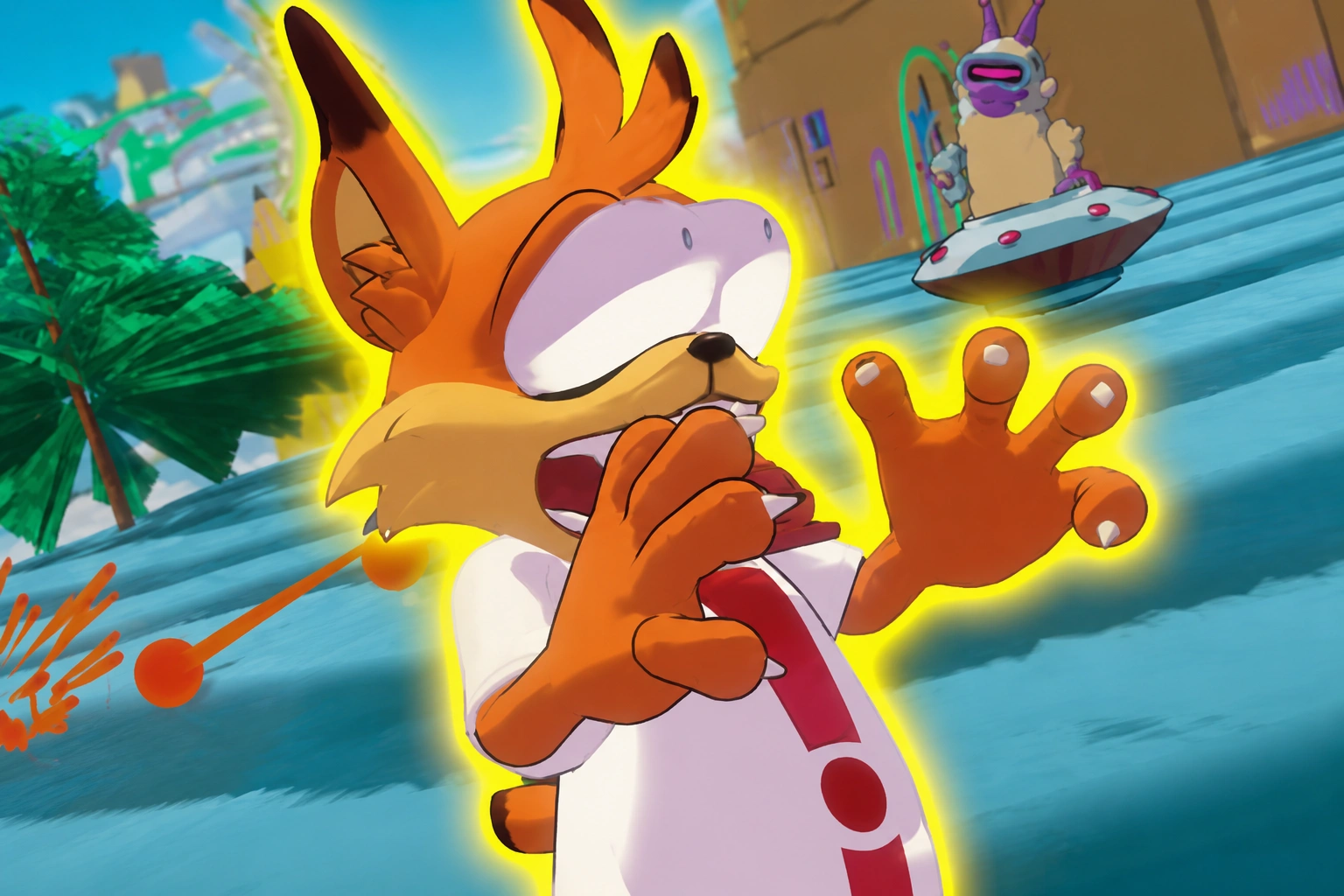
The movement possesses a distinct energy, highlighted by the character’s anxious whining and frantic mannerisms. This presentation doubles down on his signature comedic style, fostering a dynamic flow within the action. Notable highlights involve navigating environments themed around computer e-waste. In these zones, players scale immense towers and utilize Bubsy’s specialized ball form to launch themselves through the air, clearing massive structural gaps.
The overall movement possesses a distinct energy, highlighted by the protagonist’s anxious mannerisms.
In contrast to the infamous 1996 release Bubsy 3D, this iteration focuses on building speed via rapid dashes and rolling mechanics. While the protagonist lacks the blistering velocity of Sonic, maintaining a swift pace through the ball maneuver feels rewarding. At its peak, the game captures a satisfying sense of control over a whimsical protagonist.
Environmental design flaws trigger some disappointment within these stages. Although the game embraces a traditional collectathon model – requiring players to gather hidden items for vital upgrades – the environments feel barren upon closer inspection. A lack of diverse enemies and side-objectives within the open-zone maps turns these areas into a tedious slog, compared to the tighter, far more engaging linear levels.
Even so, a satisfying mechanical momentum keeps the experience engaging. At its best, the engine allows players to replicate the fluid pace of a speedrunner, bypassing massive gaps across explorable maps. However, adapting to the control scheme requires patience, as the physics can feel slippery. Precision jumping remains a frustration during late-game challenges, where slipping off narrow ledges forces players to frantically waste mid-air jumps to recover.
The primary drawback remains the short campaign, which concludes in under four hours. While a bite-sized experience has merits, the final package lacks the grand ambition it deserves. The experience shifts to its conclusion just as the level design and enemy encounters reach their creative peak. This sudden ending feels unfulfilling, cutting short the momentum built during later stages. Post-game features allow users to revisit maps to gather missed collectibles, complete time trials, or attempt a challenging permadeath mode called 9 Lives, yet the content feels slightly sparse.
The final package lacks the grand ambition it genuinely deserves.
Thankfully, the game’s distinctive charm and stylized presentation compensate for these structural limitations. The title serves as a comprehensive parody of classic platformer tropes, loaded with callbacks to legacy releases. While characters refrain from explicitly breaking the fourth wall, they completely embrace an exaggerated, cartoon reality. Clever details enhance the experience – including a pause screen gag where the protagonist panics upon entering the menu – alongside cosmetic rewards like the low-polygon skin from his original 3D appearance. Unlockable abilities poke fun at design concepts like Coyote Time – where players briefly hover after leaving a ledge – while the sharp, tongue-in-cheek dialogue keeps the experience consistently amusing.
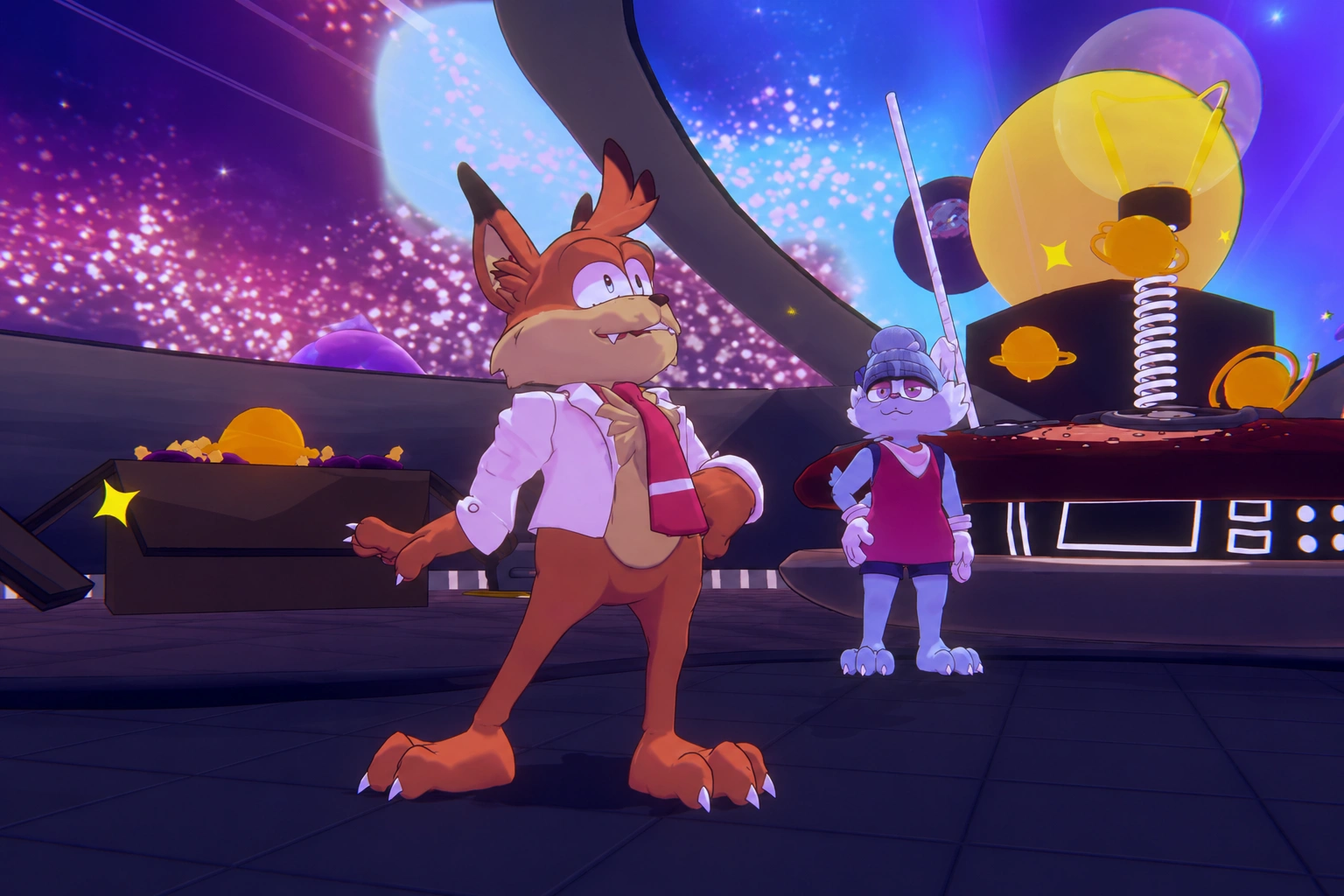
From a tonal perspective, this installment stands apart by completely embracing the nostalgic atmosphere of early Nintendo 64 landmarks like Super Mario 64 and Banjo-Kazooie. Simultaneously, modern stylistic flourishes inject vibrant energy, elevating the project beyond a standard retro clone. Despite the poor reputation of the mascot’s initial 3D outing three decades ago, this title includes affectionate references to its roots, culminating in a respectful tribute to the original development teams displayed in the credits.
Assessment of the platformer
Ultimately, Bubsy 4D cements itself as the finest entry in the franchise’s history, though that milestone represents a remarkably low bar to clear. It successfully establishes the old mascot as an endearing protagonist inside an engaging world, even if the surrounding gameplay leaves players craving a deeper experience. The momentum-based controls ensure a fast, energetic adventure, though the structural execution ultimately feels a bit safe. Nevertheless, it remains a delightful throwback that delivers satisfying retro action, offering a forgotten industry relic a well-deserved moment back in the modern spotlight.