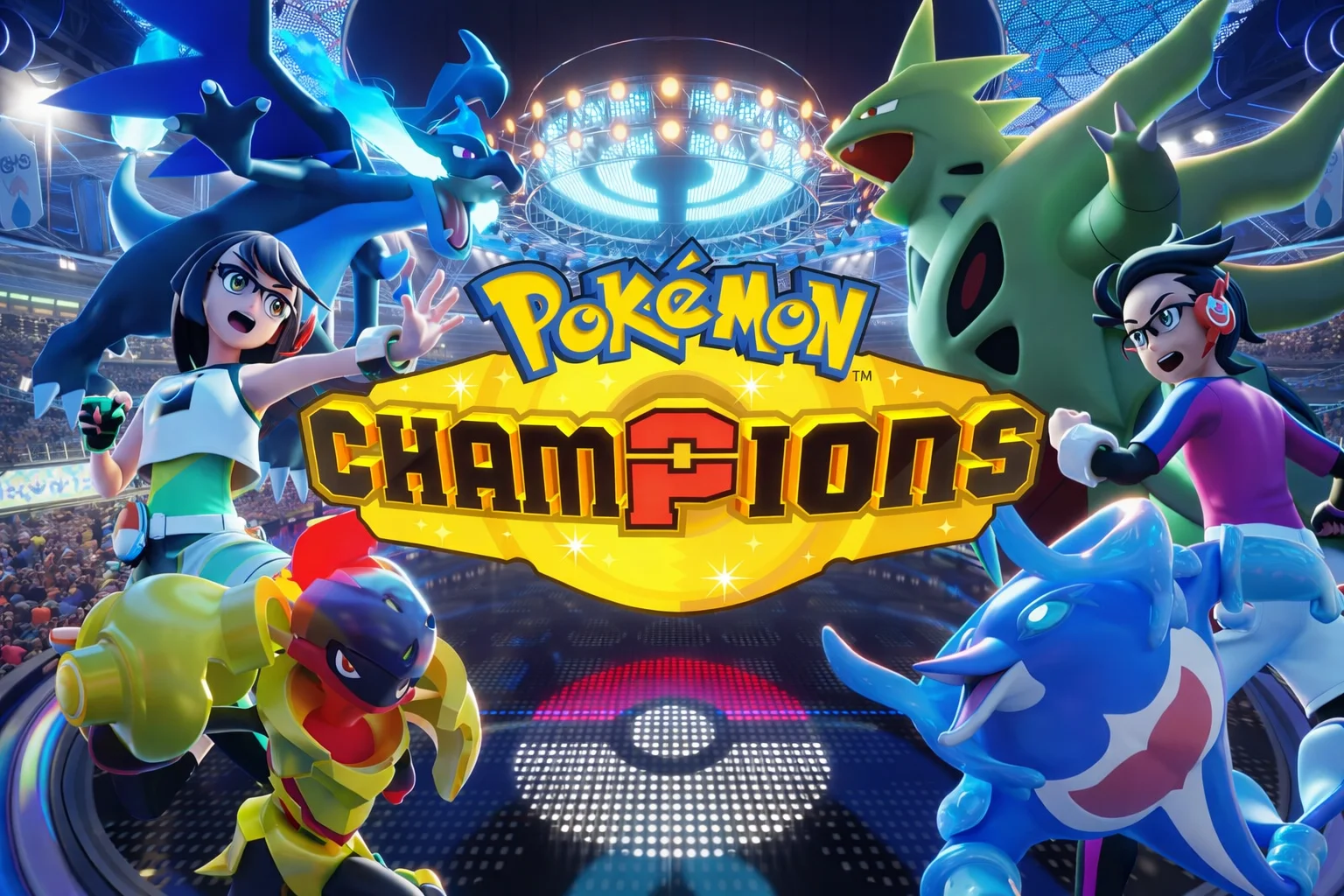

Nintendo’s latest venture into the competitive arena, Pokemon Champions, arrives 26 years after the series first experimented with battle-focused gameplay in Pokemon Stadium. Labeled as a “free-to-start” title – a term preferred by the publisher – this turn-based battler attempts to distill the essence of the franchise into a pure PvP experience. However, despite its classic roots and nostalgic appeal, the project currently lacks the substance required to stand as a definitive platform for seasoned trainers.
For veterans of the mainline RPGs, the transition to Champions is seamless – it feels like wearing a familiar pair of Running Shoes. Players assemble a team of six, selecting participants for either 3v3 singles or 4v4 double battles, though the absence of four-player team matches is a notable omission for those seeking variety. The core appeal remains the simultaneous move selection and the tactical dance of prediction and luck that has sustained the series for nearly three decades.
While developer The Pokemon Works has been active in patching bugs since the game’s launch, the foundational combat remains the project’s strongest asset. There is a compelling “just one more match” loop that keeps players engaged late into the night. It is a testament to the strength of the turn-based system that it remains entertaining even when stripped of the traditional catching and leveling progression that usually defines the experience.
Unfortunately, for a game exclusively dedicated to fighting, the actual variety of gameplay options is disappointingly thin. Trainers are forced to choose between single or double battles with no option to utilize their entire six-member roster in a single fight. The complete absence of offline content – such as a return to the Gym Leader Castle or cooperative legendary raids – leaves the experience feeling hollow for those not looking for constant online competition.
Competitive community roster limitations
This scarcity of content is most evident in the roster, which features a meager 186 creatures. The selection process appears to favor the “popular kids” – icons like Charizard and Sylveon take center stage while niche favorites like Lickitung or Porygon are excluded. Furthermore, the exclusion of early-stage evolutions and major legendaries like Mew and Mewtwo creates significant gaps that players can only hope will be filled by future updates.
The competitive meta has been particularly neglected, as the current roster supports only three of the 22 Pokemon used in the 2025 World Championships Masters Division. Held items are similarly uninspired, consisting mostly of basic berries or type-boosting gear. Essential tactical tools used by hardcore players are notably absent from the current build:
- Power Herb
- Choice Specs
- Air Balloon
Populating your team involves either importing creatures via Pokemon Home or utilizing the in-game recruitment farm. While the Home transfer process is efficient and reliable, the native recruitment system relies on a rotating gacha-style pool. Players receive one free daily pull, with further additions requiring Victory Points (VP) or temporary rentals – a system that heavily mirrors the mechanics found in modern mobile titles.
The mobile influence is impossible to ignore, from the interface layout to the multiple currencies designed to accelerate timers. Currently available on Switch 1 and 2, the game offers a $7 Starter Pack, though the “free-to-start” experience remains viable for now. VP can currently only be earned through missions and ranked play, which prevents the game from feeling overtly predatory, even if the DNA of a smartphone app is present throughout.
Visual presentation of battle mechanics

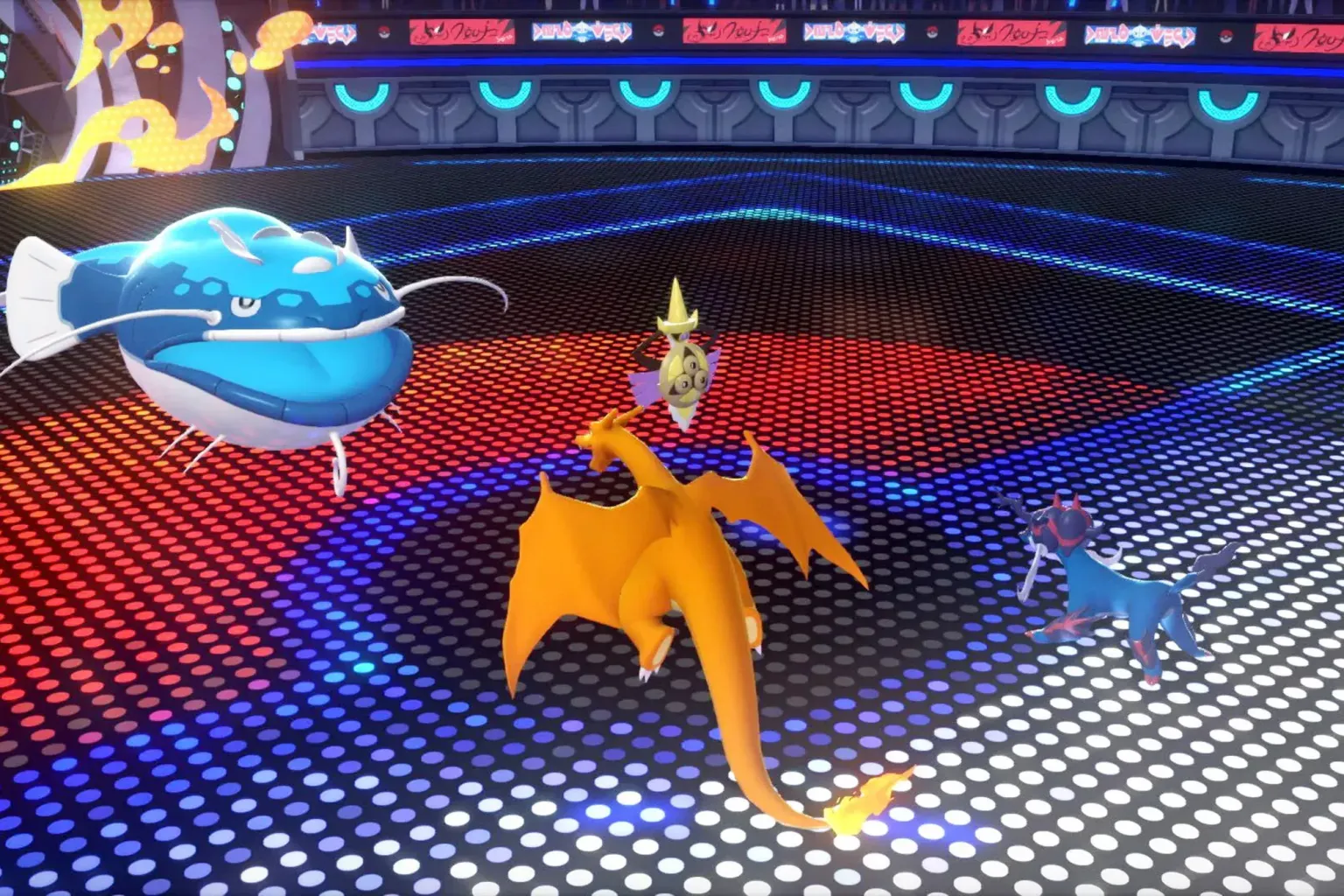
Visually, the game struggles to impress, often failing to meet the standards set by previous entries. The Pokemon models lack the necessary texture and detail to feel like modern assets. Animation quality is inconsistent – while a Hyper Beam looks appropriately devastating, other moves like Body Slam appear stiff, with the user remaining in an idle pose while the opponent is flattened.
It’s 2026; it would be great if Bullet Seed didn’t just spawn a few feet in front of my Pokemon.
It is particularly frustrating to see projectiles manifesting in mid-air rather than originating from the Pokemon. When compared to 2018’s Let’s Go titles, the graphical improvements are negligible at best. The once-novel thrill of seeing these monsters in 3D has faded, and Champions does little to innovate or improve the visual fidelity of the franchise compared to titles like last year’s Digimon Story Time Stranger.
One area of success is the Training Room, where players can invest VP to customize their team’s stats, abilities, and natures. While these changes are exclusive to Champions and do not carry over through Pokemon Home, they offer a level of strategic fine-tuning that is genuinely welcome. There is, however, a lingering concern that if VP becomes a purchasable currency, the system could easily devolve into a pay-to-win environment.
Final verdict
Pokemon Champions is a missed opportunity that fails to deliver a knockout blow, offering a barren experience overshadowed by mobile-centric monetization. While the core combat remains as engaging as ever, the lack of content often makes one long for the depth of the mainline series. The classic battle system has survived the test of time, but this specific iteration requires its own evolution before it can be considered the definitive competitive platform.