

The success of a game often lies in its meticulous attention to detail, and Mouse: P.I. for Hire is a masterclass in small, atmospheric flourishes. Players are greeted with protagonist Jack Pepper absentmindedly humming the game’s theme over the splash screens before a full-bodied jazz score takes over the main menu. Every skirmish is punctuated by the nostalgic ding of a boxing gong at the start and the rhythmic clang of three bells signaling a knockout once the dust settles. Even travel is handled with care; instead of simple loading screens, players guide a small car across a beautifully animated isometric map of the city. These elements showcase the developer’s dedication to creating a world that feels lived-in and handcrafted.
Set in the rain-slicked, seedy streets of Mouseburg, the game reimagines classic Hollywood detective noir through the lens of 1930s “rubber hose” animation. It is a world where Fleischer Studios meets early Mickey Mouse, populated by mobsters, crooked politicians, and sultry femme fatales. Troy Baker delivers a brilliant performance as Jack Pepper, a cynical and world-weary private eye caught in a web of shadowy cults and missing persons. The narrative journey begins with a cinematic chase across an airborne blimp before diving into the core mystery – the disappearance of a stage magician. As Jack digs deeper, it becomes increasingly evident that the rot in Mouseburg goes far beyond a simple case of a missing person.
Noir Atmosphere Meets High-Octane Action
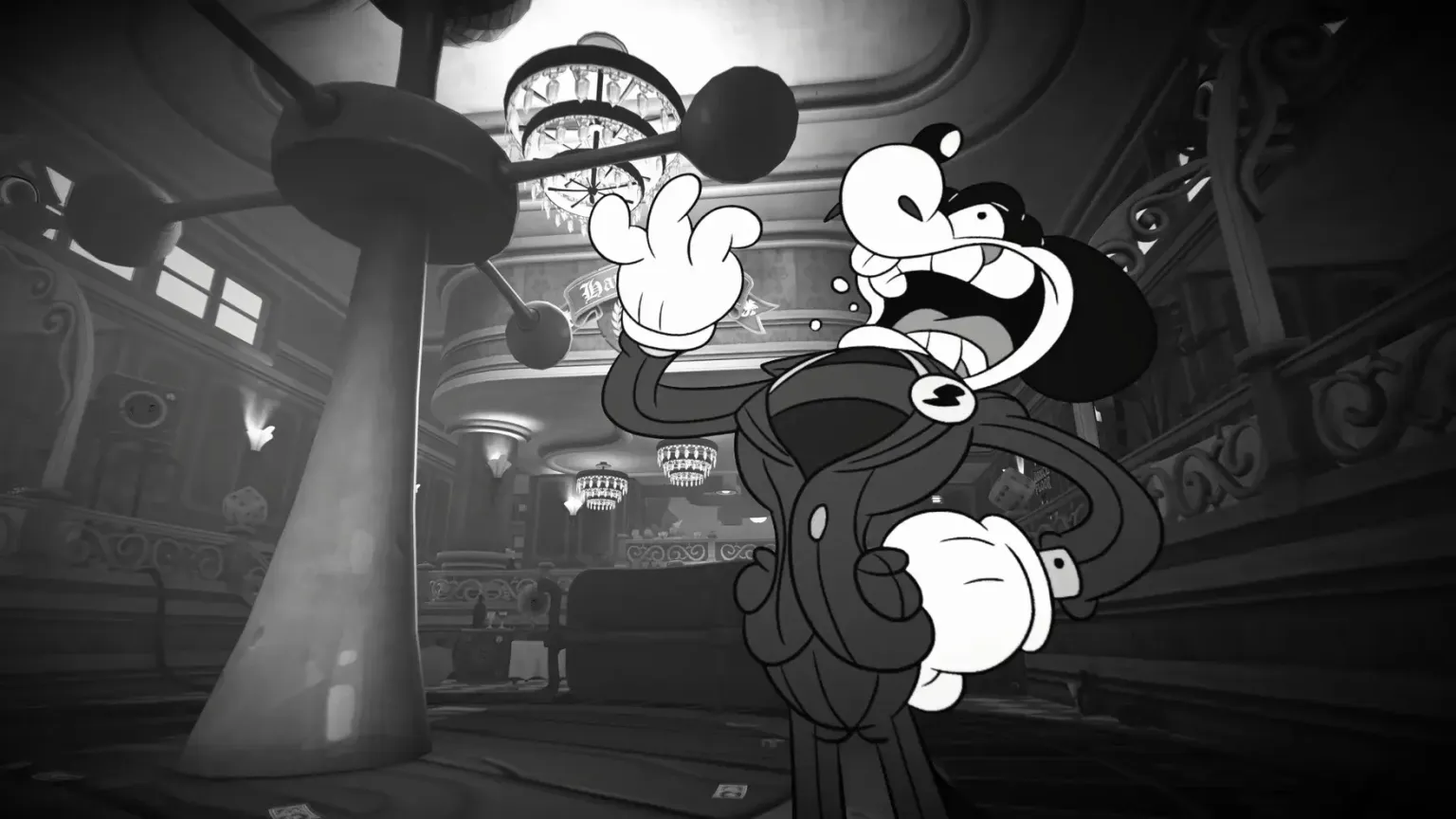
At its heart, Mouse: P.I. for Hire is a pure noir pastiche that remains a warm-hearted and wryly amusing experience despite its dark setting. While the script occasionally stumbles – particularly when attempting to reference real-world atrocities that feel out of place with the game’s general tone – the overarching mystery is genuinely compelling. Fumi Games has poured immense effort into the visual presentation, offering a substantial 15-hour runtime filled with lavish animation and meticulous backdrops. This sumptuous artistry is paired with a spirited jazz soundtrack and a stellar voice cast, ensuring that the game’s stylistic flair never fades even in its final hours. Underneath this aesthetic, however, lies a gameplay foundation that many might find unexpected.
The investigation catapults Jack across a variety of evocative locations, from high-class steamboats and opera houses to haunted bayous and seedy circuses. Between missions, players return to HQ to pin clues to a traditional crime board, yet the moment-to-moment gameplay is firmly rooted in the “boomer shooter” tradition of the 1990s. Despite the creative freedom offered by a cartoon setting, the arsenal remains largely grounded in noir staples like pistols, shotguns, and tommy guns. These weapons provide a satisfying tactile experience, though the game does occasionally branch out into more eccentric gear. One notable example is the turpentine gun, which allows Jack to melt his enemies into smoldering piles of celluloid, leaning into the game’s unique animated premise.
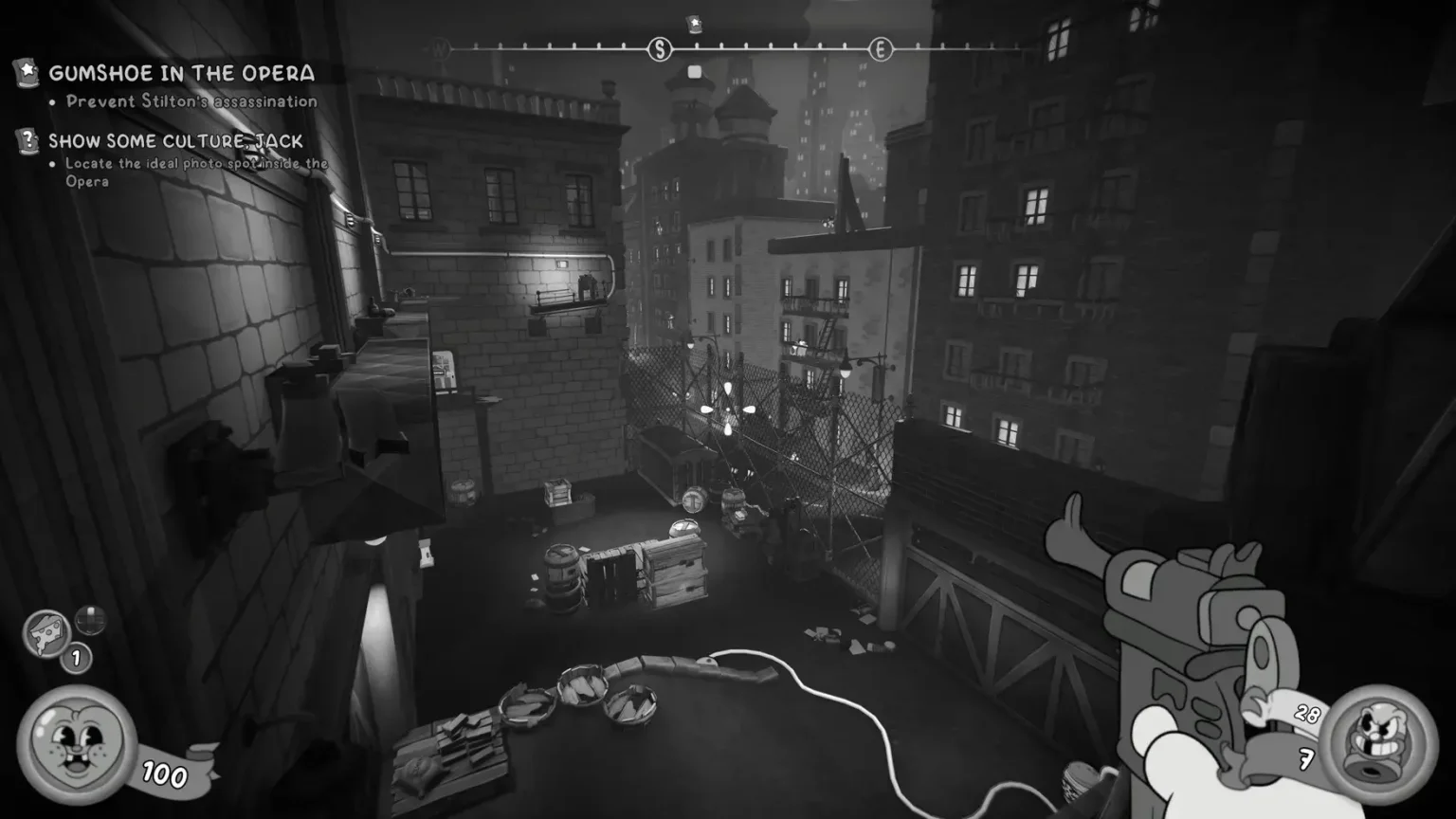
The combat in Mouse: P.I. for Hire is defined by a sense of relentless slapstick momentum. Encounters typically take place in arena-like environments where enemies arrive in waves following the sound of the bell. Do not expect complex tactical maneuvers from the opposition; the various goons, cultists, and “tank-like” heavies act as brainless cannon fodder. These rodents and alligators are programmed to rush the player in high-speed swarms, turning every fight into a frantic exercise in crowd control and evasion. While the lack of sophisticated AI might seem like a drawback, it creates an intense, chaotic energy that keeps the player constantly on the move.
Jack Pepper is well-equipped for these frantic brawls, possessing a toolkit that emphasizes mobility and physical impact. He can boot enemies to create breathing room or kick barrels of toxic gloop into the middle of an oncoming horde. His movement capabilities – including a multi-directional dash, a spring-heeled double jump, and a slow propeller glide – allow for high-speed traversal across the arenas. A grappling hook eventually joins the arsenal, enabling Jack to slide and bound through the environment while gathering health and ammo. While this system is somewhat lightweight and “one-note” due to the lack of deep strategy, it remains consistently engaging through its sheer speed and fluid animations.
Dynamic Level Design and Pacing
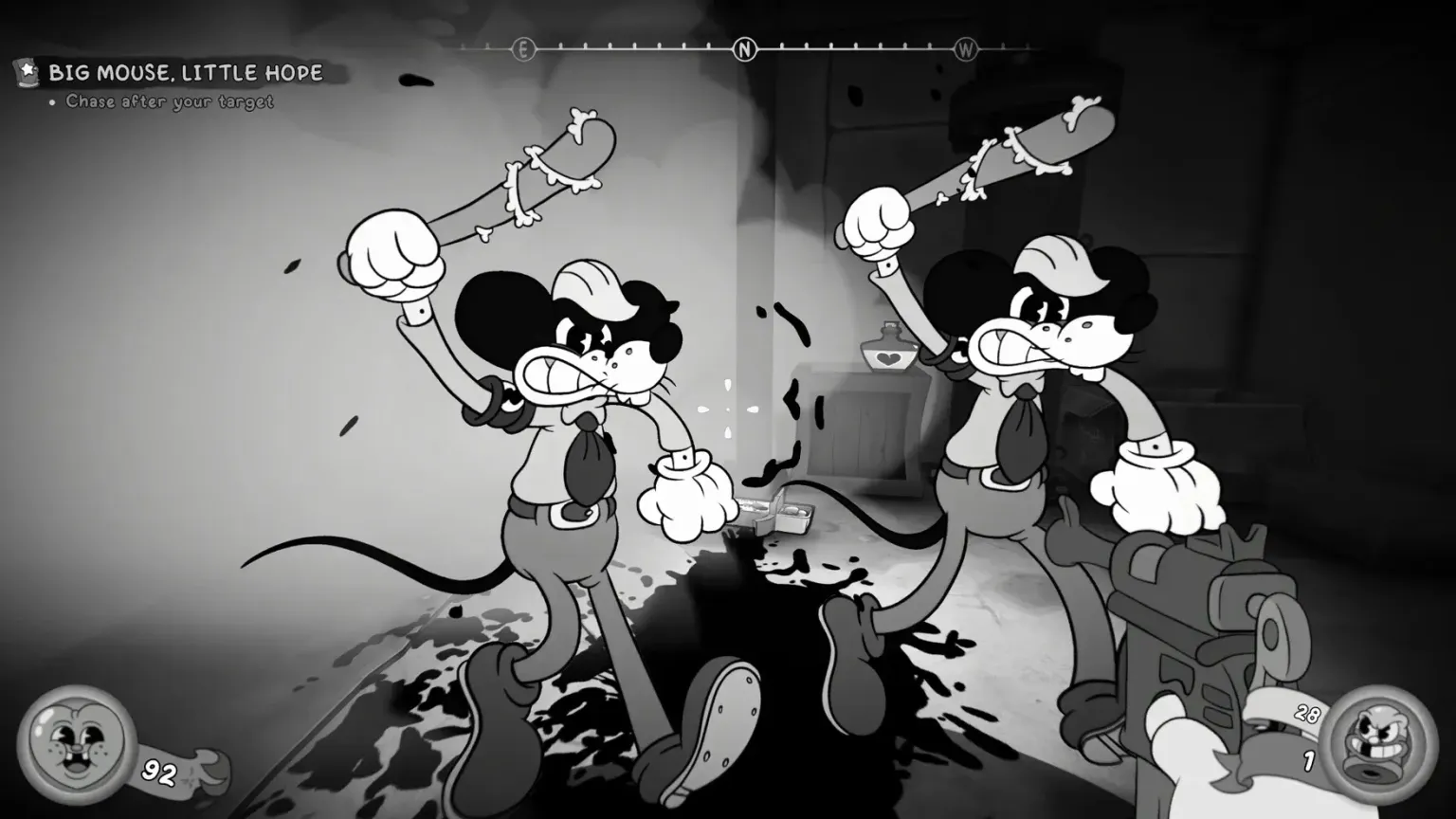
Fumi Games maintains a brisk pace, ensuring that the combat encounters leave the player on an adrenaline high without overstaying their welcome. The developers have introduced significant variety into the level design to prevent the action from becoming repetitive. Players will find themselves fighting on a railway bridge while subway trains roar through the battlefield or navigating shifting scenery on an opera house stage. One memorable sequence involves a literal game of “the floor is lava” featuring flaming rings and circus trampolines. The boss battles are a particular highlight, featuring imaginative mechanics such as a graveyard showdown with a ghost and skeletons that requires the strategic use of a flashlight.
The game’s pacing is perhaps its strongest asset, balancing the intensity of combat with periods of exploration and light puzzle-solving. The missions are set in large, looping, and lavishly detailed spaces that feel like self-contained mini-adventures. For instance, the search for the magician takes the player from theater dressing rooms through rain-washed alleyways and into the side corridors of a bustling subway station. Later levels involve navigating fire escapes in mouldering tenement buildings or infiltrating a police station through multiple possible routes. From gloomy mines to oozing wetlands and spooky mansions, the environmental variety remains consistently impressive throughout the journey.
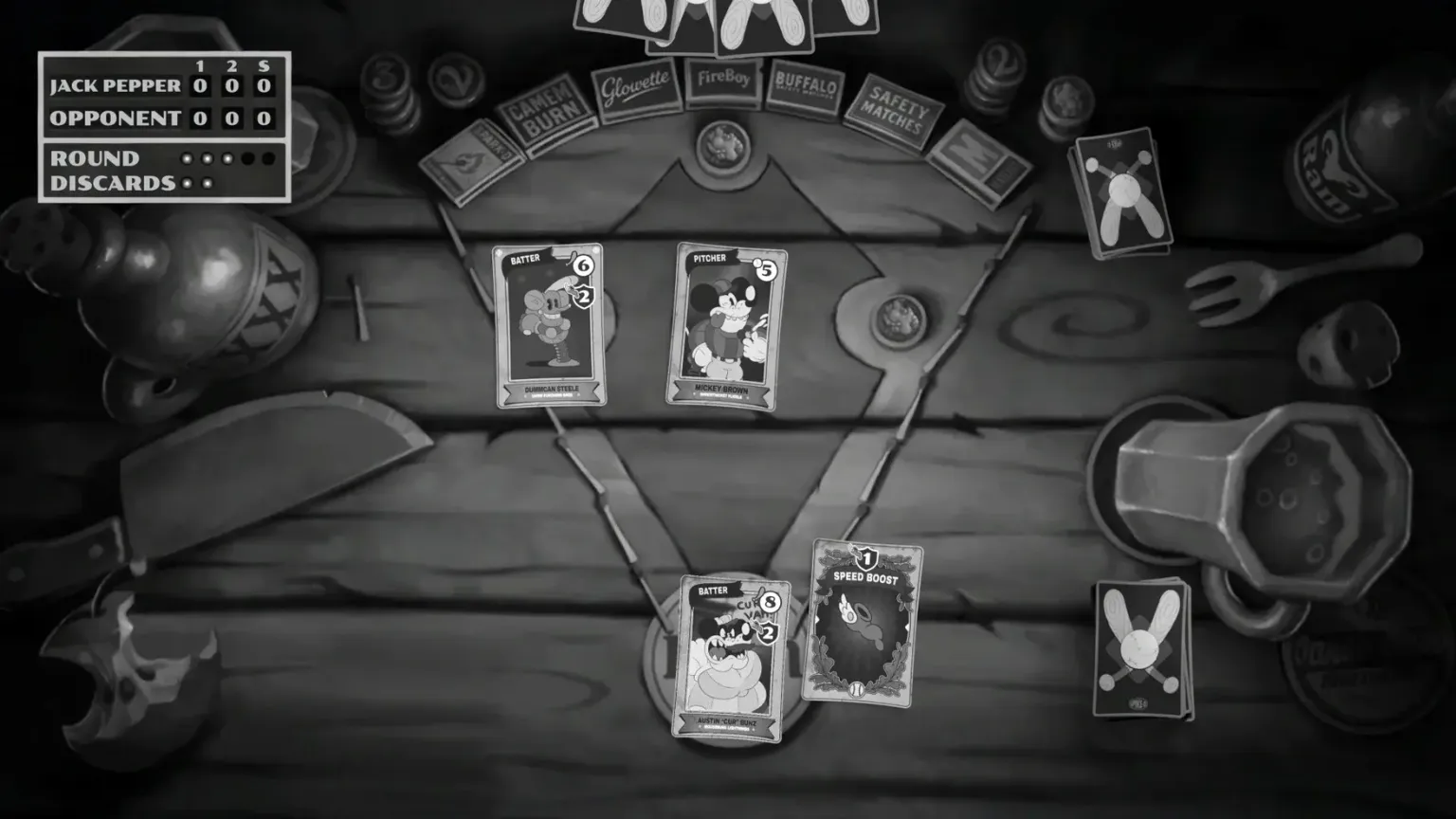
While the mission structure is largely linear – sometimes preventing players from returning to find missed collectibles – the levels are packed with enough secrets to make exploration feel rewarding. The structural flow of the game is enhanced by the hub world in Jack’s neighborhood. Between missions, players can decompress at the cheese bar, interact with a cast of delightful rogues, or participate in a baseball card mini-game to win prizes. The ability to upgrade weapons and choose between multiple open leads provides a sense of agency, maintaining the illusion of an open-ended investigation even when the path forward is carefully directed.
Despite the high quality of the experience, there are minor blemishes that hold the game back from perfection. The detective elements are somewhat undermined by a persistent and non-toggleable onscreen objective marker that tells the player exactly where to go. This inclusion feels patronizing, especially since more elegant hint systems – like a fingerprint brush and a quest compass – are already part of the game. Additionally, the constant fourth-wall-breaking references to pop culture icons like Mario, Fallout, and Tomb Raider can occasionally break the noir immersion. However, these are small complaints for a game that is so atmospheric and beautifully crafted. Mouse: P.I. for Hire is a smart, surprising adventure that proves those “little touches” truly do make all the difference – especially when you can drop a piano on a mobster’s head.