

Esports has grown from niche internet forums into one of the most-watched competitive spectacles on the planet. Millions of people tune in to follow matches across dozens of games, often across multiple time zones simultaneously. When your favorite team is playing on the other side of the world at 3am, you don’t always get to watch live — but you still need to know what happened, and you need to know fast. The demand for real-time information has reshaped how fans engage with competitive gaming, and the tools built to meet that demand have quietly become as important as the broadcasts themselves.
How Real-Time Data Changed the Way People Follow CS2
Counter-Strike has always had a uniquely information-hungry fanbase. Unlike games where the result is the only thing that matters, CS players want to know the round count, the economy state, who got the opening kill, and whether the comeback is still mathematically possible. That culture of granular analysis pushed the development of tracking tools well ahead of what other esports had.
Today, accessing cs2 live match scores while the action unfolds has become second nature for a large portion of the fanbase — not just for casual curiosity, but because following the score in detail changes how you understand what you’re watching. A 12-3 halftime doesn’t tell the full story; knowing that the trailing team won five pistols in a row, or that their star AWPer is sitting at 40 ADR, tells you a lot more. Real-time data isn’t a replacement for watching — it’s a layer that makes watching (or following from a distance) more meaningful.
Platforms providing live scoreboards have also made CS2 more accessible to people who don’t have time for three-hour VODs. You can check the score during a work break, catch the highlights when you’re back, and still feel like you followed the match properly.
The Role of Mobile and Notifications in Fan Habits
A few years ago, following a tournament meant sitting at a desktop with a stream open. Now fans track matches across devices without interruption. Push notifications, dedicated esports apps, and integrated scoreboards on aggregator sites have made it possible to follow a match while commuting, working, or doing something else entirely.
This shift matters because it changed the shape of the fanbase. People who could never commit to four hours on a weekend can now stay informed in five-minute increments. That’s opened up esports to a broader, more casual audience without reducing engagement from hardcore fans — both groups get what they need from the same data infrastructure.
The real winner here is the competitive ecosystem itself. More informed fans generate more discussion, more betting activity, more content, and more demand for future events. Real-time access isn’t just a feature — it changes the economics of the whole scene.
Why Delays Frustrate Fans More Than Anything Else
Spoilers have always been a problem in sports, but in esports they move at a different speed. A match result can appear in a Discord server, on Twitter, or in a Twitch chat seconds after the final round ends. If official score trackers or broadcast platforms lag behind even by a minute, that information often reaches fans through unofficial channels first — usually without context, and often with a reaction that ruins the emotional arc of the match.
Fans who have been spoiled on a result often skip the VOD entirely. From the perspective of content creators, tournament organizers, and broadcasters, a delayed score feed doesn’t just annoy fans — it actively pushes them toward the unfiltered chaos of social media, which benefits nobody with a stake in the official viewing experience.
The solution the industry has gravitated toward is low-latency data feeds that update as play happens, ideally synchronized with or slightly ahead of the broadcast delay. When fans can trust that the scoreboard reflects reality, they stay on official platforms. When they can’t, they go looking elsewhere.
What Fans Actually Look for Beyond the Score
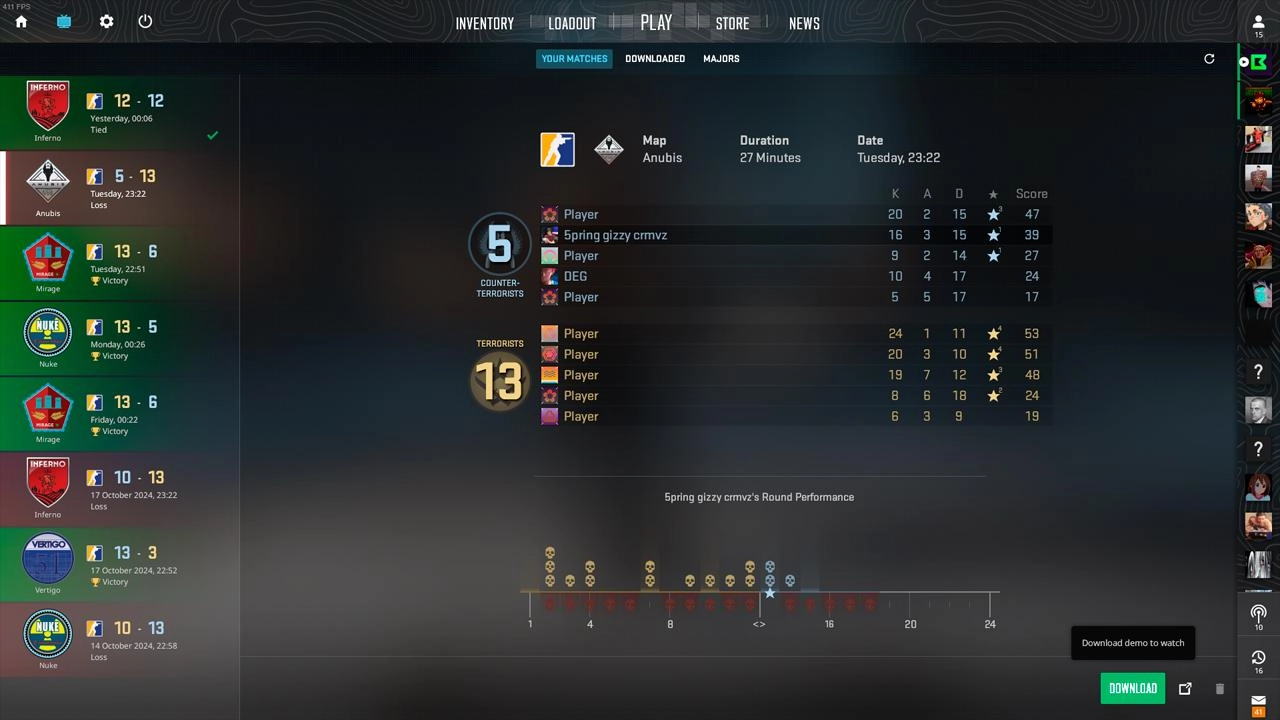
The score is the hook, but it’s rarely all anyone wants. Around every live CS2 match, a secondary layer of stats has become standard reading: kill/death ratios, HLTV rating, utility damage, clutch conversion rates. For fantasy esports participants and bettors, these numbers are the primary product — the match itself is just the context.
Deeper stats also fuel the post-match discussion that has become a major part of esports culture. Clips get shared, analyses get posted, disagreements about player performance fill Reddit and Twitter for hours after a match ends. None of that discourse is possible without the data layer that live scoreboards feed into.
This is why the best tracking platforms don’t just show scores — they offer round-by-round breakdowns, heat maps, and economy graphs. The fans who use them aren’t just keeping up; they’re building their own understanding of the game, and that kind of engagement is harder to lose than passive viewership.
Conclusion
The ability to follow match results in real time isn’t a luxury anymore — it’s the basic expectation that comes with being an esports fan today. What started as simple scoreboards has grown into a full data ecosystem that shapes how fans watch, discuss, and invest in competitive games. For CS2 in particular, where rounds happen fast and momentum shifts in seconds, real-time information isn’t background noise — it’s the whole story. Fans who have access to it stay engaged longer, understand more, and come back for the next tournament. The tools built around live data have become part of the sport itself.