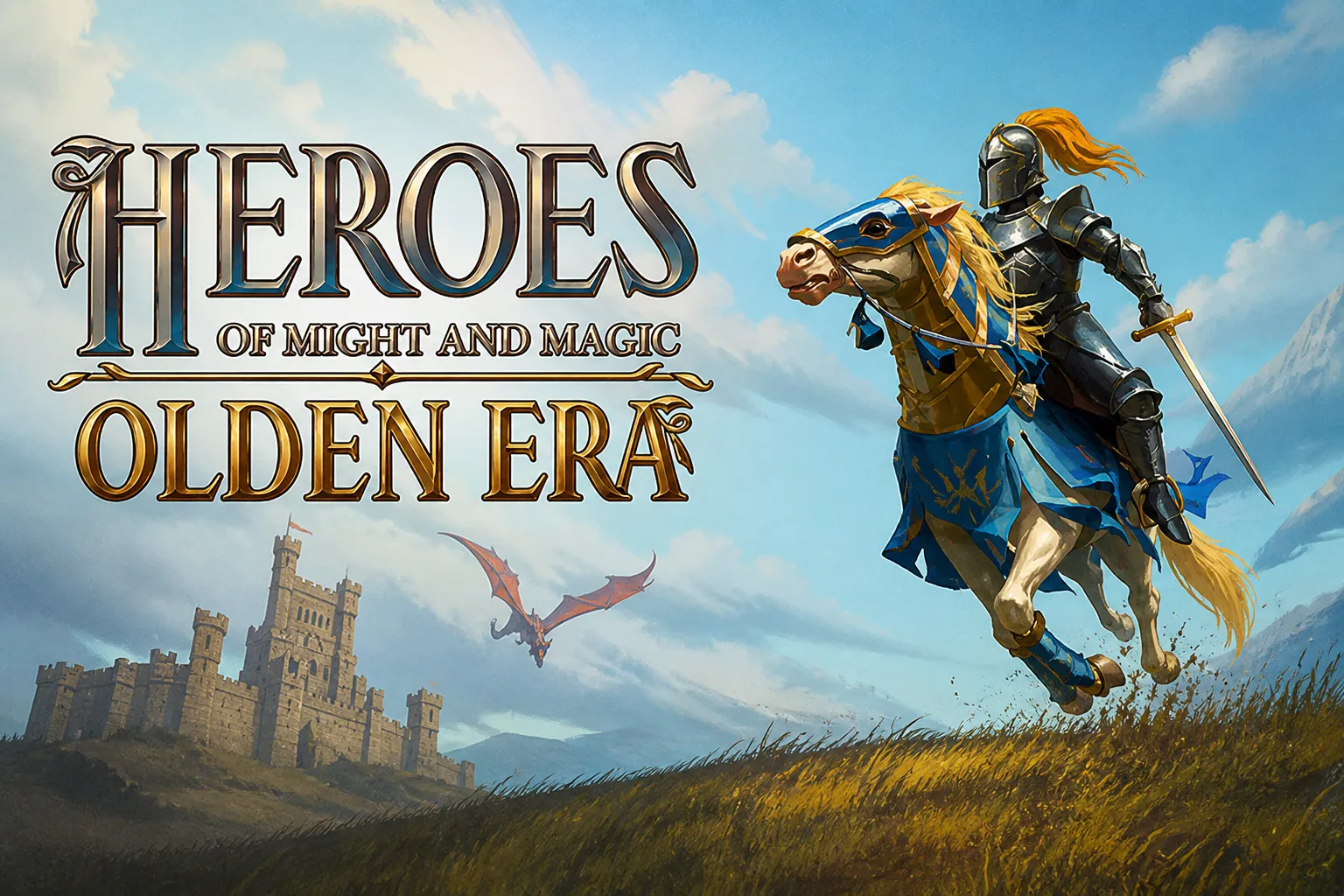

Heroes of Might and Magic: Olden Era marks a significant attempt to return the franchise to the beloved style and functionality of the third installment. While the game integrates certain advancements from later sequels, the core experience remains a dedicated tribute to the 1999 era. This early access release serves as a compelling argument for why that period is still considered the series’ absolute peak, capturing a specific turn-based magic that has largely vanished from the modern gaming landscape.
For those new to the series, the fundamental mechanics center on controlling heroes and cities across a vibrant top-down world. Players move across the land to collect resources and expand their influence through tactical battles on a hex-based grid. The world map is densely packed with exotic landmarks – ranging from resource caches and gold mines to recruitment centers where soldiers can be hired for the right price. Equipping artifact sets provides powerful bonuses, creating a constant drive to scavenge every corner of the map.
The gameplay loop creates a steady stream of engaging strategic choices, even as the initial sense of discovery eventually gives way to calculated planning. Players must constantly weigh their options – such as whether to spend gold on hiring neutral troops or focusing on reinforcements from their own faction’s territory. These decisions are often pressured by the presence of enemies; delaying an assault on a resource-rich crypt might allow an opponent to seize the rewards first before you are ready.
Randomization plays a major role in how maps unfold, as the placement of key points of interest changes with every new session. To help navigate this, Olden Era introduces clearer difficulty indicators for enemy encounters compared to the vague hints found in previous titles. However, this randomness can occasionally make long-term goals – like completing specific artifact sets – feel unattainable if the necessary items simply do not appear during a playthrough.
Diversity of faction units in combat
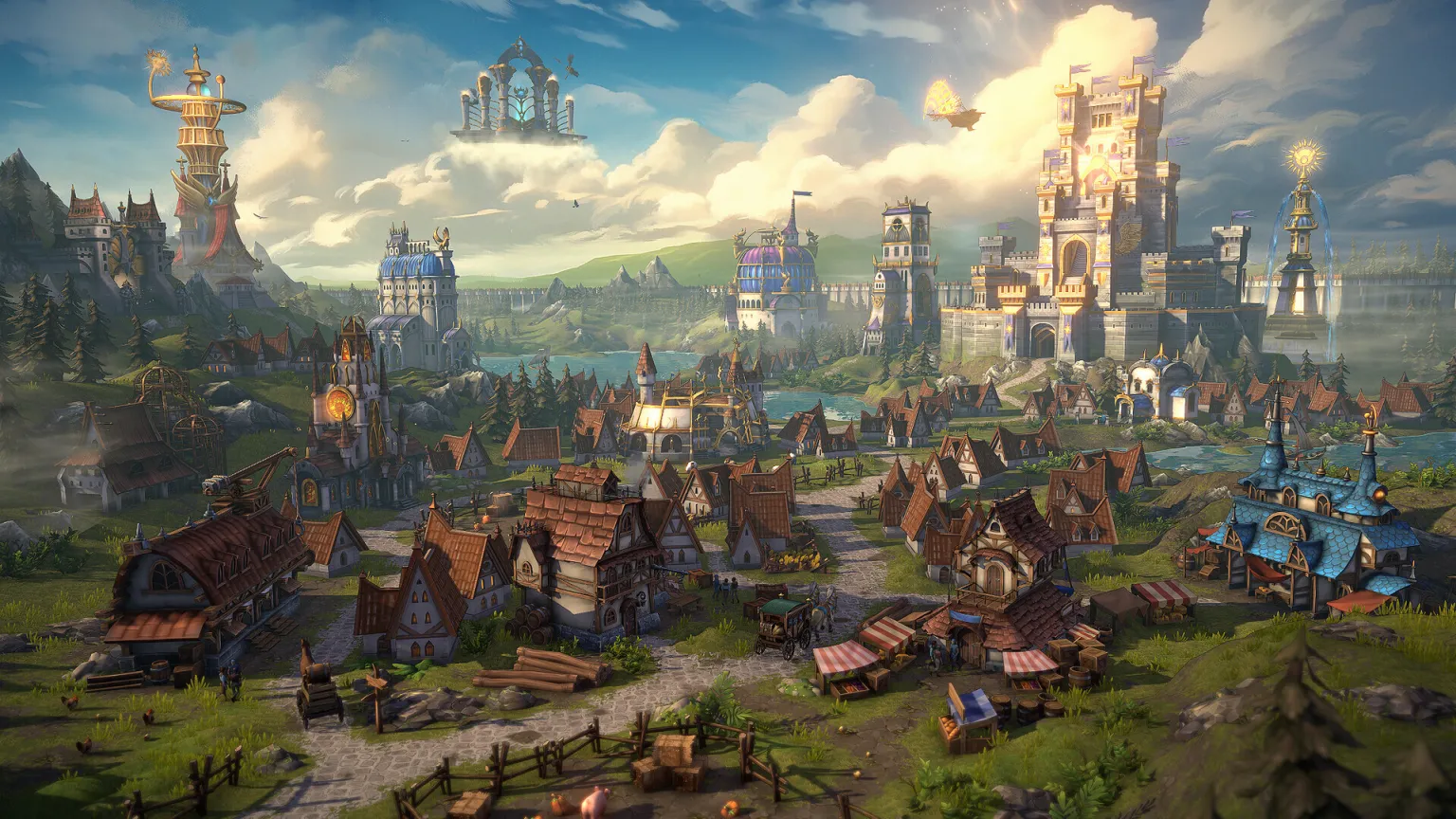
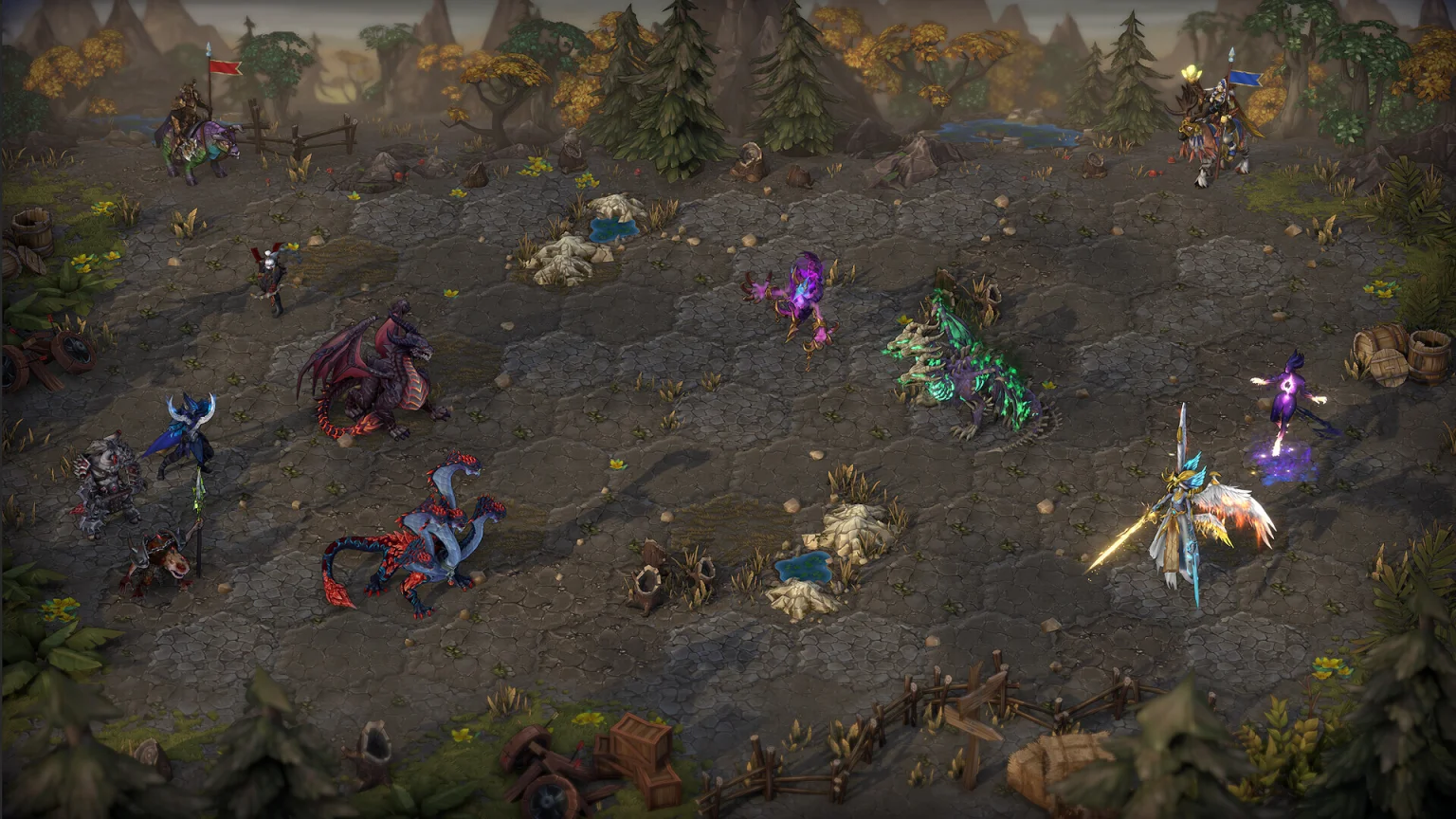
The unit variety in each faction is a highlight, showcasing a high level of creativity from basic foot soldiers to massive tier-seven entities. Most groups are reimagined versions of classic favorites; for example, the Temple acts as a holy refuge featuring knights and angels. The insectoid Hive serves as a darker replacement for the traditional demonic forces, while the Rift introduces a cold-themed cult of elves who utilize extradimensional horrors.
Every faction operates with a distinct combat philosophy that influences how players approach engagements. The Hive’s insectoid swarm relies on overwhelming melee power, making it difficult to avoid casualties during a push. The Dungeon offers a balanced approach with its mix of dark elves, minotaurs, and dragons, while the Grove requires significant financial investment before its high-tier units become effective. Meanwhile, the Rift’s strength scales passively through consecutive victories in battle.
Despite sharing a standardized tier system, units vary significantly in their mechanical roles and utility. A tier-one Parasite from the Hive is designed specifically to take down higher-level creatures, whereas a Necropolis Skeleton functions primarily as a cost-effective defensive barrier. Additionally, many creatures possess unique abilities that require focus points to activate, introducing a deeper layer of tactical management during active combat.
Players can further specialize their armies by choosing between two different upgrade paths for each unit. These upgrades can fundamentally change a unit’s role – such as a Faun archer choosing to become a more powerful marksman or a dedicated melee combatant. While the game features over 80 variants, the visual and mechanical distinction between some options could be clearer to help players understand the immediate impact of their choices during the upgrade process.
Hero progression and city development
Heroes act as the essential leaders of your armies, utilizing passive traits and magical spells to turn the tide of war. Every faction starts with a selection of heroes, each possessing a unique talent like a unit bonus or a specific elemental affinity. However, the progression system is heavily influenced by chance, as players must select new skills from a random pool during level-ups. This can make it difficult to unlock specialized subclasses, which require a specific combination of five traits.
Despite having distinct and detailed portraits, the heroes often lack mechanical individuality during actual gameplay. This is partly due to the magic system, where spells are learned randomly from available city structures rather than being inherently tied to a character’s identity. While a magic-heavy hero can be incredibly powerful by using lightning or crowd-control spells, their arsenal is ultimately determined by the luck of what their city buildings provide during the construction phase.
Settlements serve as the heart of your operations, though they currently suffer from a degree of functional uniformity. Each turn allows for the construction of one new building to expand troop production, learn spells, or improve the economy. While each faction’s city is visually distinct and beautifully rendered, the optimal construction path tends to remain the same regardless of whether you are managing a holy temple or an insectoid hive.
Factions do possess a few unique structures, though their impact on the game varies. The Temple’s scout airship increases visibility around the city, but this is less game-changing than the Grove’s mycelium roots, which enable instant travel between friendly towns. The “Laws” system also contributes to this feeling of similarity, as the research tree for each faction often provides nearly identical stat bonuses and growth buffs with only minor keyword changes across different groups.
Tactical combat and initiative systems
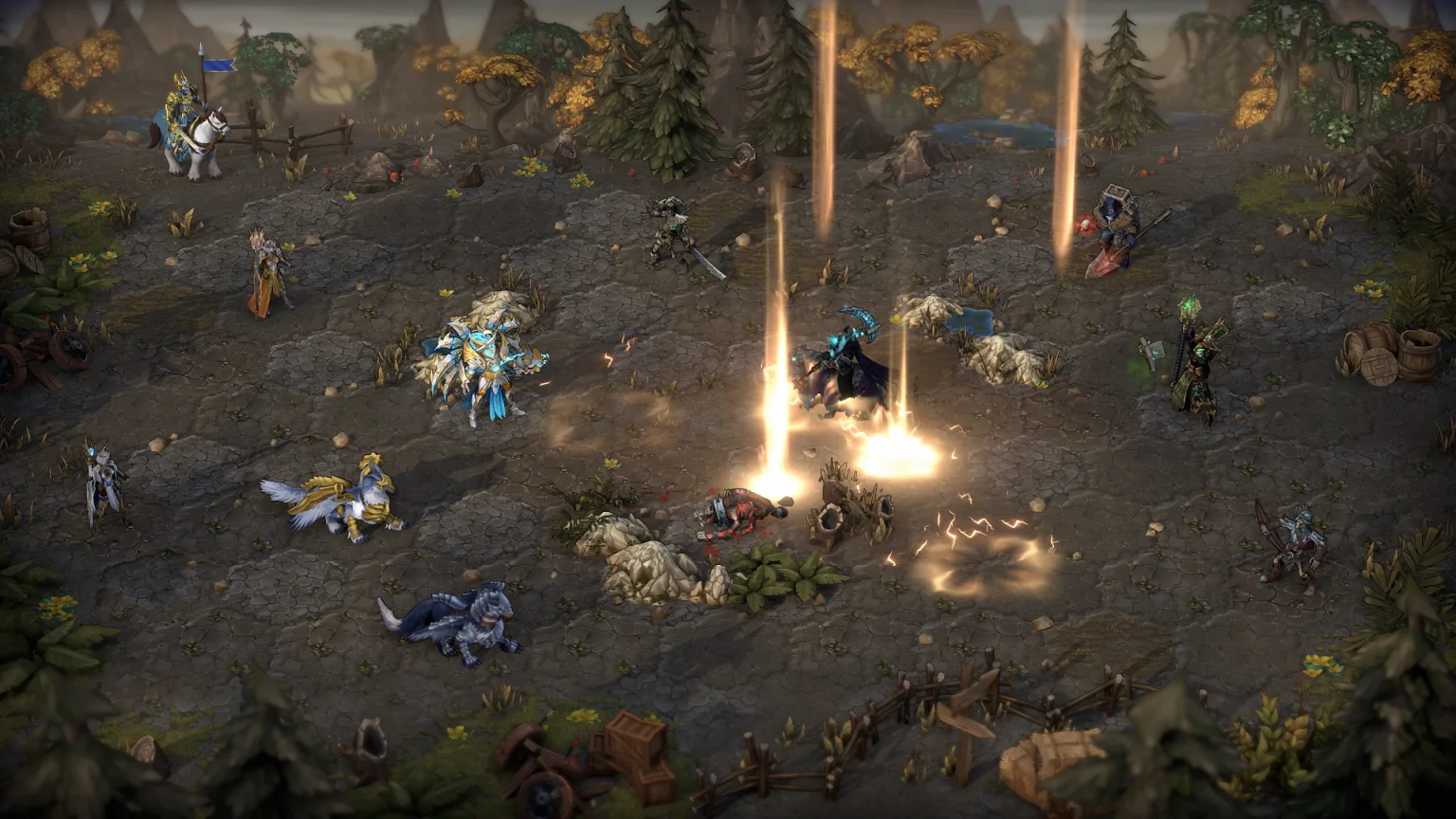
Combat is the defining feature of the experience, utilizing a hexagonal grid that requires careful positioning. Players must navigate terrain obstacles and traps while managing a mix of melee and ranged units. Because every unit retaliates against melee attacks, relying on ranged armies often feels like a safer strategy. This can make melee-focused groups feel vulnerable, especially during the early stages of a game when resources are tight and every soldier counts.
The depth of combat lies in the initiative system, which dictates the order in which units take their turns. Players can manipulate this order by making units “wait,” a tactical decision that can force an opponent to commit their units first. Spells that control speed or movement, like Web and Ice Bolt, are vital for breaking these standoffs and offer more strategic depth than the simple stat-buffing spells found in earlier series entries like the second or third games.
Among the various modes, the story-driven Campaign currently presents the most challenges. It follows the journey of Gunnar, a minotaur scout from the Dungeon faction, as he navigates the world of Jadame and investigates emerging threats. While the narrative includes choices that impact progress, the experience is hampered by unskippable cutscenes and several technical bugs. These issues range from game crashes to missions that fail to track completed objectives correctly.
A major drawback of the campaign mode is that it disables many of the game’s most interesting features, such as advanced hero subclasses and certain city buildings. This restriction is intended to control the difficulty curve of the story maps, but it results in a less engaging experience compared to other modes. Consequently, the campaign may not be the best starting point for players looking to explore the full depth of the game’s diverse tactical systems.
The new Arena mode offers a faster alternative for competitive play, functioning similarly to a card-based draft. Players select a hero, skills, and units from a randomized selection before facing off in a direct duel. This mode is excellent for testing unit synergies and learning combat mechanics without the long-term commitment of a traditional map. It emphasizes tactical skill under randomized conditions and is a promising addition for the multiplayer community.
For those seeking the classic experience, the standard mode remains the primary way to play, complemented by the new “Single Hero” option. This streamlined mode limits each side to one commander, reducing the complexity of managing multiple fronts and making it ideal for shorter sessions. Despite its early access status and the need for further balancing, Olden Era successfully preserves the core appeal of the franchise while offering enough new content to satisfy both veterans and newcomers alike.