
You can tell when an action game truly lands. It leaves your hands tense, your focus drained, and that brief moment afterward where survival itself feels surprising. Housemarque has built that sensation before, and Saros proves the studio still knows exactly how to create it.
From its first major encounters, Saros pushes beyond Returnal in pure moment-to-moment combat. Mechanical additions, harsher enemy behavior and relentless tempo turn nearly every arena into a spectacle of movement, pressure and split-second decisions.
Yet the same speed that powers its strengths also exposes weaknesses. Saros rarely slows down long enough for its narrative or broader structure to breathe, and parts of the experience can feel dragged behind the force of its own momentum.
Combat Defines the Experience
At heart, Saros is a procedurally generated arena shooter. Enemies flood the screen with dangerous projectiles, launching, summoning or spewing glowing spheres that demand constant dodging, blocking and occasional parries if you want to stay alive.
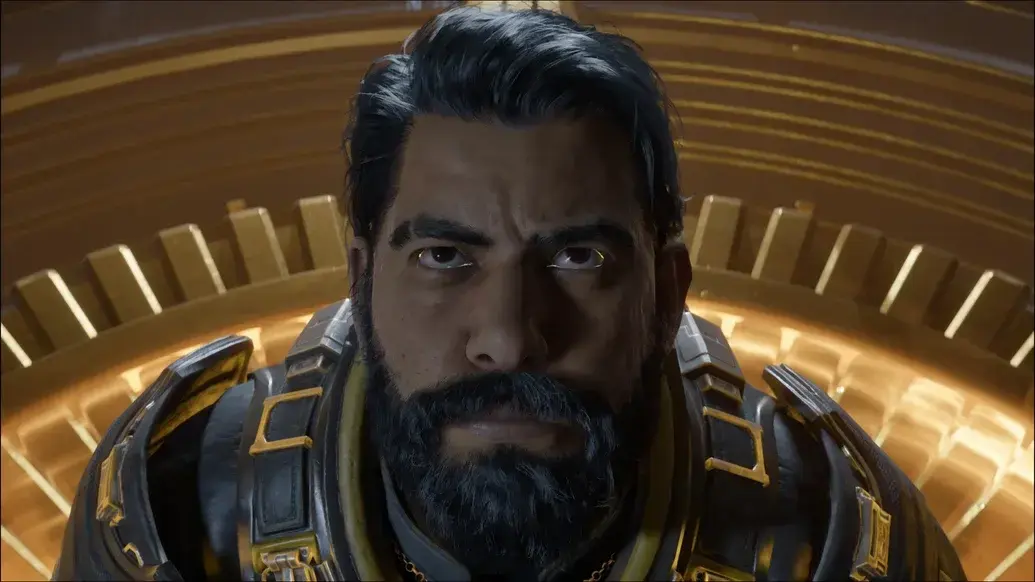
One of the key additions is Arjun Devraj’s shield. It looks defensive at first glance, but its real purpose is aggression. Certain attacks can be absorbed to charge special abilities, allowing players to turn enemy pressure into retaliation.
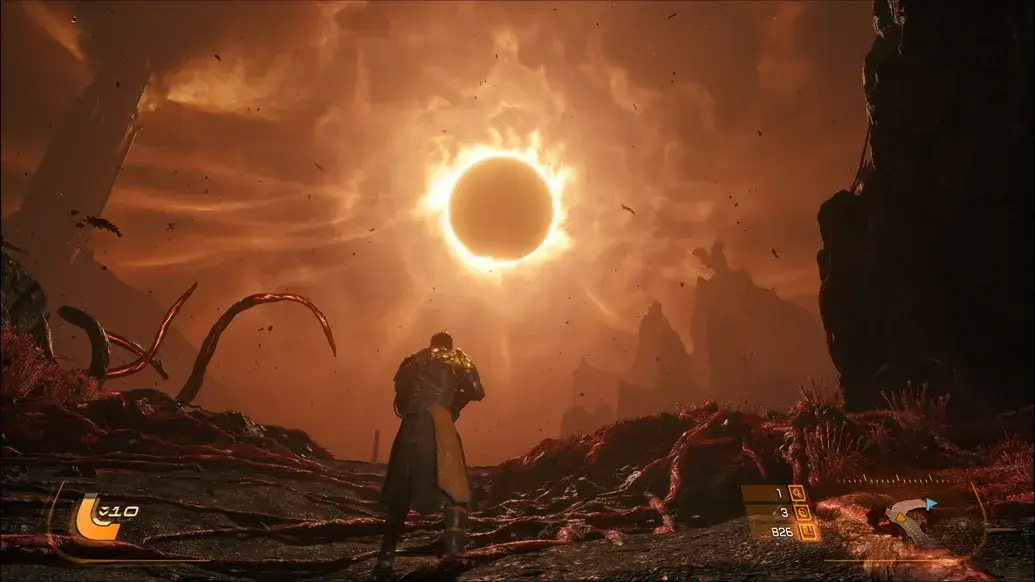
The second major mechanic is the Eclipse system. During a biome run – whether in crimson marshes or deep underground facilities – players eventually reach a strange plantlike structure formed from grasping hands.
Activating it transforms the entire region. Swamps become pools of burning acid, alien machinery roars to life, and enemies gain deadlier attacks. Yellow projectiles inflict Corruption, cutting maximum health until it is removed with special attacks.
Both systems feed each other effectively. Shields encourage players to move toward danger rather than away from it, while Eclipse mode makes that risk far more costly.
The result is a constant push and pull. Players must enter Eclipse at some point in a run, but many will choose to stay there longer because the harder route can create stronger builds.
Boss Battles Escalate in the Second Half

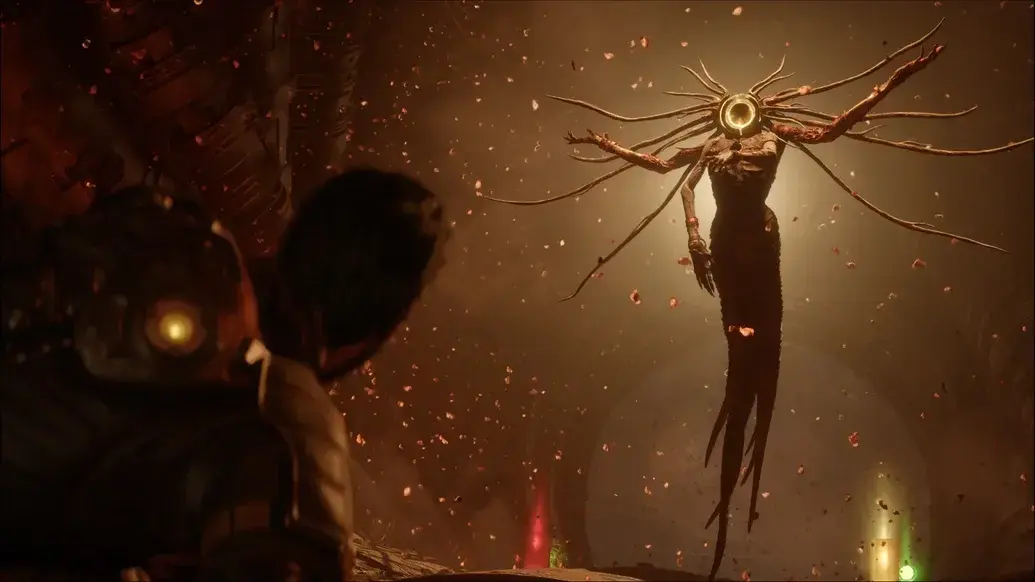
Each biome ends with a boss fight, another area where Housemarque continues a growing reputation. Saros raises both the number of major encounters and their visual scale.
The opening stretch is less convincing. Early bosses look impressive but feel static, and a pair of later encounters resemble enhanced versions of standard enemies rather than true centerpieces.
Later on, however, the game changes dramatically. The second half delivers enormous confrontations so oversized and elaborate that several of them feel like possible finales before the real credits appear.
Regular combat may be even more impressive. Saros steadily combines enemy types in nastier combinations, turning familiar threats into fresh disasters.
One standout foe is the Devastator, a satellite-like enemy that rains huge curtains of projectiles from above. Its first appearance shocks. A stronger version later in the campaign feels closer to catastrophe.
Not every combat element works. Some weapons, especially certain shotguns or variants lacking autohit support, feel underpowered and awkward compared with stronger options.
There is also a laser turret enemy that can become deeply frustrating. Its attacks strike instantly, and in crowded fights the warning window can be easy to miss.
Even so, Saros usually balances challenge and excitement well, though occasional encounters cross the line into feeling unfair.
Storytelling Loses Ground
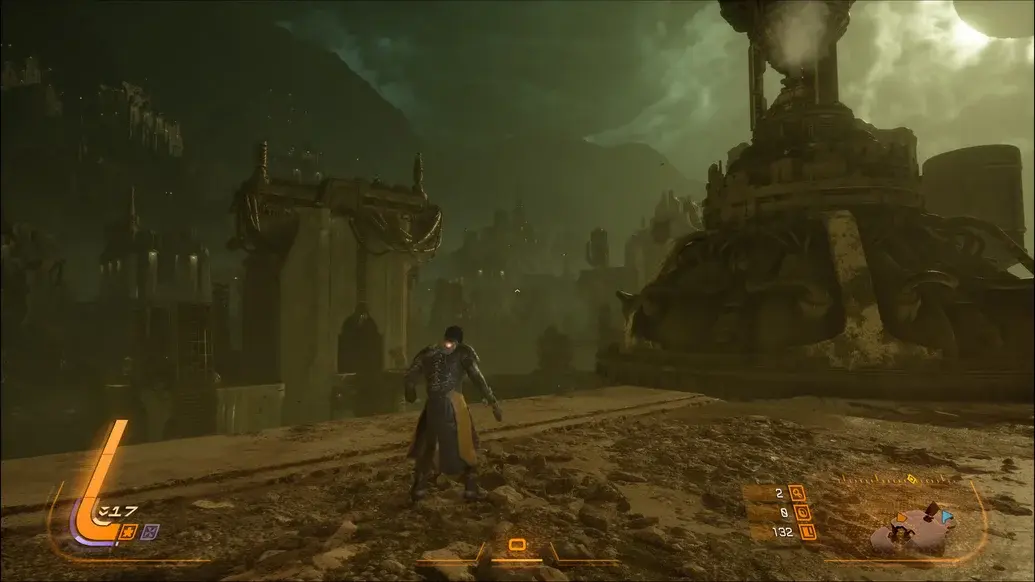
If every system matched the quality of the action, Saros would stand among the genre’s elite. Instead, storytelling marks a step backward compared with Returnal.
The issue is less that the story is poor and more that it does not suit the game surrounding it. Returnal centered its mystery tightly around Selene, asking immediate questions players could hold onto amid chaos.
Saros chooses a broader science-fiction plot built around colonial ambition, giant corporations and hostile artificial intelligence. More characters enter the script as the game progresses, some in person and many through audio logs.
That type of narrative could thrive in a slower exploration game. Here, with constant combat interruptions and overlapping timelines, following every thread becomes difficult.
Many personalities fail to leave a strong impression, but even stronger writing might struggle under the circumstances. It is hard to track names when thousands of glowing threats are crossing the screen.
Arjun himself also spends long stretches with limited presence. Although there are plot reasons for this, it weakens emotional connection and reduces the impact of the game’s central mystery involving his past relationships.
There are still compelling ideas present. Time distortion, heavier themes rarely explored in this style of game, and a convincing cosmic dread all give Saros substance.
The repeated references to The King in Yellow are less successful. What begins as influence can feel overused, often crowding out the game’s more original concepts.
Progression Systems Offer Mixed Results
Saros adopts a more modern roguelite structure than Returnal. Players are not always sent back to the absolute beginning, instead restarting from zone checkpoints while using earned currency to improve Arjun’s core stats.
That framework works smoothly enough, though players expecting deep buildcrafting may be disappointed. The skill tree is relatively narrow, and major progress is tied to defeating key bosses.
Run-based upgrades are more interesting. Weapons, resources and temporary bonuses appear throughout each area, but artifacts are the most valuable rewards.
Artifacts increase base stats while granting passive bonuses such as healing after kills or restoring power through melee use.
Inside Eclipse mode, those same artifacts become stronger but gain penalties.
These drawbacks can include fall damage, heavier recoil or longer dash cooldowns, turning powerful builds into calculated gambles.
That tension often persuades players to commit fully to Eclipse runs, chasing extreme strength in exchange for danger. It is one of the cleaner moments where Saros joins mechanics and narrative temptation together.
Later in the game, however, artifact rewards can slow dramatically. Runs that once overflowed with options may produce only a handful of meaningful finds.
This may reflect balancing rather than intent. The same structures that grant artifacts also provide weapons and other randomized rewards, and broader unlock pools appear to favor gear more often over time.
It does not break progression, because success is never dependent on artifacts alone. Saros remains demanding but rarely impossible.
Still, sparse rewards can hurt pacing, especially on short routes to bosses or maps with fewer optional zones where upgrades usually appear.
They also reduce some of the thrill that Eclipse mode is designed to create.
Even with those flaws, Housemarque moves forward more than backward. Saros may stumble in story and tuning, but its combat is exceptional – the kind that keeps players thinking about the next run long after stepping away.