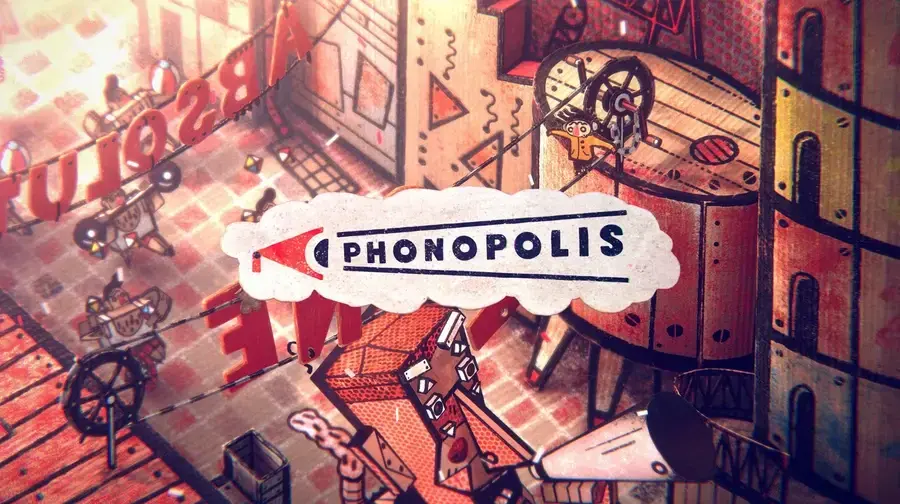

There exists something almost miraculous about Amanita Design’s continued existence. While game studios worldwide endure restructuring, mass layoffs, and outright closures in today’s brutal industry, the Czech collective led by Jakub Dvorský keeps releasing point-and-click adventures that captivate players through meticulously crafted worlds, compelling narratives, and visual artistry. Phonopolis – announced in 2022 after a decade of development beginning in 2016 – represents the studio’s most ambitious statement yet. A full decade for an indie project is substantial, but I’m here to explain why Phonopolis stands as the artistic apex of everything Amanita Design has accomplished.
The narrative unfolds in a city bearing its own name – Phonopolis, roughly translatable as Sound City. It resembles a caricature of totalitarian states that cuts painfully close to reality. Citizens here don’t dream, avoid unnecessary thought, and obey every command broadcast through loudspeakers. Felix, our protagonist, lived this way until he accidentally fell underground while sorting through society’s “garbage” – remnants from when the city still knew art and true beauty. There he discovered headphones capable of drowning out the amplified voices. Suddenly freed to think independently, Felix becomes a traitor to Phonopolis and its Leader. His quest begins: uncover what truly happens behind closed systems.
The story feels like a blend of Orwell, Kafka, and Terry Gilliam’s Brazil – yet it refuses to descend into hopeless despair. Amanita Design masterfully balances heavy dystopia with their signature absurdist humor. The game features a “Ministry of Request Denials,” and sabotaging the totalitarian machine often resembles slapstick comedy reminiscent of Buster Keaton or Charlie Chaplin.
Beneath the irony lies something far deeper. In our contemporary moment – where endless information noise, algorithms, and propaganda frequently replace people’s own thoughts – Felix’s story resonates on a visceral level. The game reminds us that sometimes the most revolutionary act is simply “putting on headphones,” creating distance from the crowd’s roar, and allowing yourself genuine critical thought. It conveys this message without preaching or moral lectures, instead maintaining a light tone. Such stories often carry greater impact than heavy-handed discourse.
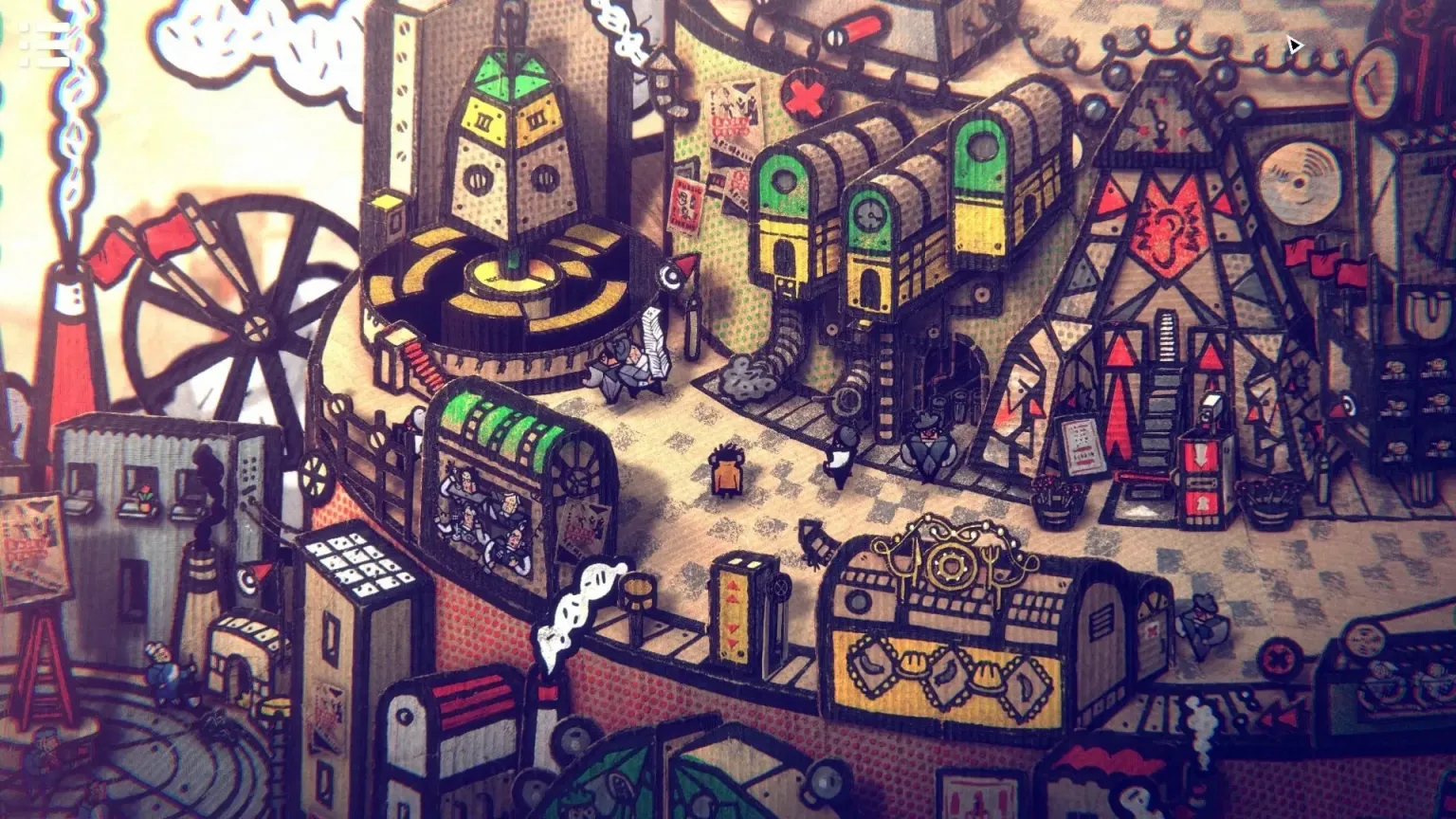
The visual presentation represents a triumph of meticulous manual labor and stylization. Studio animators constructed actual cardboard sets, painted them by hand, then carefully scanned and transferred them into 3D space. You can even glimpse this process from the main menu.
The animation of Felix and his surroundings particularly enchanted me. It deliberately echoes vintage animation – slightly “choppy,” but in the most pleasant way. Following every movement, even the minutest gestures, remains engaging through to the final credits.
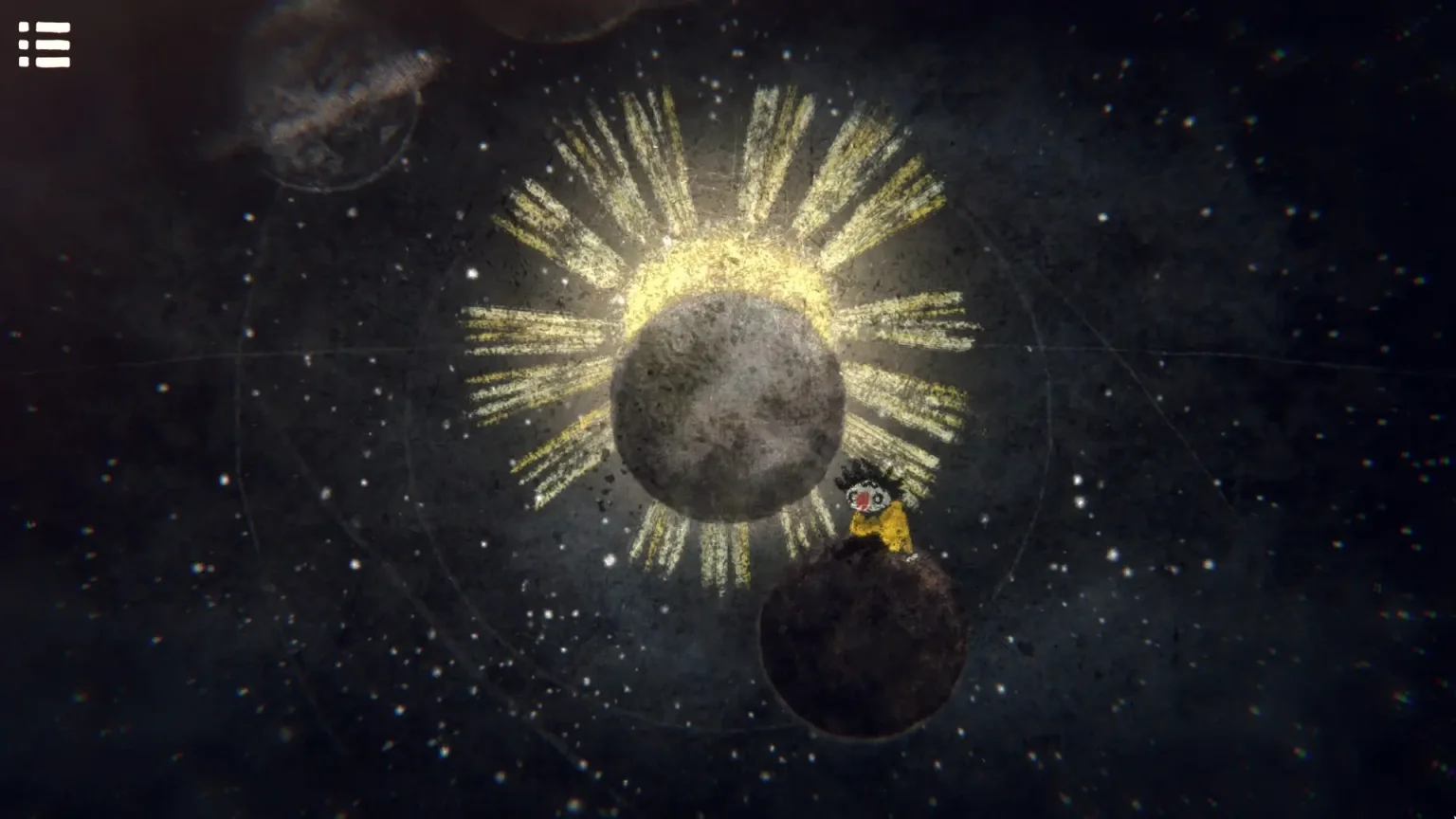
Phonopolis’s artistic direction consciously draws inspiration from early 20th-century movements – constructivism and suprematism. That aesthetic, with its aggressive reds, blacks, and grays rendered as geometric forms, was historically employed in early Soviet propaganda. Using the visual language of totalitarian regimes to deconstruct and mock those very systems – that’s both a luxurious and clever artistic move.
Everything benefits from tactile sound design. Each step Felix takes, every rotation of cardboard levers, every paper rustle feels material and present. Tomáš Dvořák’s score – created by a long-time Amanita Design collaborator – establishes the perfect melancholic tension, while full voice acting and narration elevate the studio’s storytelling into genuinely theatrical territory. The gramophone needle’s crackle particularly stands out, pleasantly complementing numerous soundtrack pieces.

When gameplay enters the picture, Phonopolis follows more conventional paths, though executed at undeniably high quality. Mechanically, the game abandons the genre’s historical reliance on collecting dozens of inventory items, instead focusing on direct environmental manipulation. You pull cardboard corners, rotate platforms, reposition mine carts, and navigate bureaucratic mazes. Those familiar with the smaller but worthy game Windosill will immediately recognize this approach. The environmental tactility is extraordinary – interacting with these mechanisms feels rewarding even when unnecessary for progression, simply because the experience proves so satisfying.
The problem emerges around puzzle difficulty. The game can be completed in essentially one sitting. Those rare moments when Phonopolis attempts genuine challenge often suffer from non-intuitive logic. Rather than experiencing intellectual breakthrough, you’ll find yourself resorting to blind trial-and-error combinations, guessing until something clicks.

This lenient difficulty, combined with straightforward puzzles, exposes another significant weakness – the game’s brevity. Western reviewers cautiously mention 4-6 hours of gameplay, but reality proves harsher. If you quickly grasp the logic of these cardboard mechanisms, you’ll reach the final credits within 2-3 hours. I say this as someone who’s spent decades with puzzle games.
The experience ends precisely when you’ve begun savoring its atmosphere. Add complete absence of hidden objects or replay incentives, and one thing becomes clear: this is a one-time experience, however brilliantly executed.
Phonopolis represents concentrated interactive art that perfectly captures contemporary anxieties while respecting your own time investment. True, its puzzles lack sophistication, and its length leaves you wanting more. Yet these shortcomings dissolve completely within the artistic direction, sumptuous audio design, and the genuine warmth with which the game tells its story – that of one small person challenging an entire system. Amanita Design has constructed a magnificent cardboard manifesto for freedom, giving us every reason to embrace their vision with renewed enthusiasm.