
Lunar Division has introduced Amberspire – an isometric, turn-based city-building simulator that exchanges traditional management for the cold unpredictability of dice rolls against the moon. This single-player digital board game is a dense tapestry of science fiction influences, ranging from the architectural visions of Paolo Soleri to the speculative concepts of Ursula K. Le Guin. Players find themselves navigating a world where Old World Venetian aesthetics meet high-concept technology, such as the late-game “ansible” buildings. It is a game that challenges the player’s agency, placing them as the “divine hand” that must cast the dice and live with the consequences, which, more often than not, prove to be humbling.
To cope with the persistent cycle of collapse and rebirth, the experience often requires a personal mental soundtrack to maintain morale. The game evokes a sense of working-class solidarity and resilience, reminiscent of a “Les Misérables” struggle where neighborhoods are lost to the elements one piece at a time. In many ways, the spirit of the game is captured by the idea of getting knocked down only to get up again – a fitting anthem for a city built atop an ancient lunar mausoleum. The inhabitants of this world are perpetually locked in a struggle against the encroaching fog and grass, existing in a state where destruction is as certain as construction.
Production and Availability Overview
- Developer: Lunar Division
- Publisher: Bithell Games
- Platform: PC
- Launch Date: Available since May 6 on PC
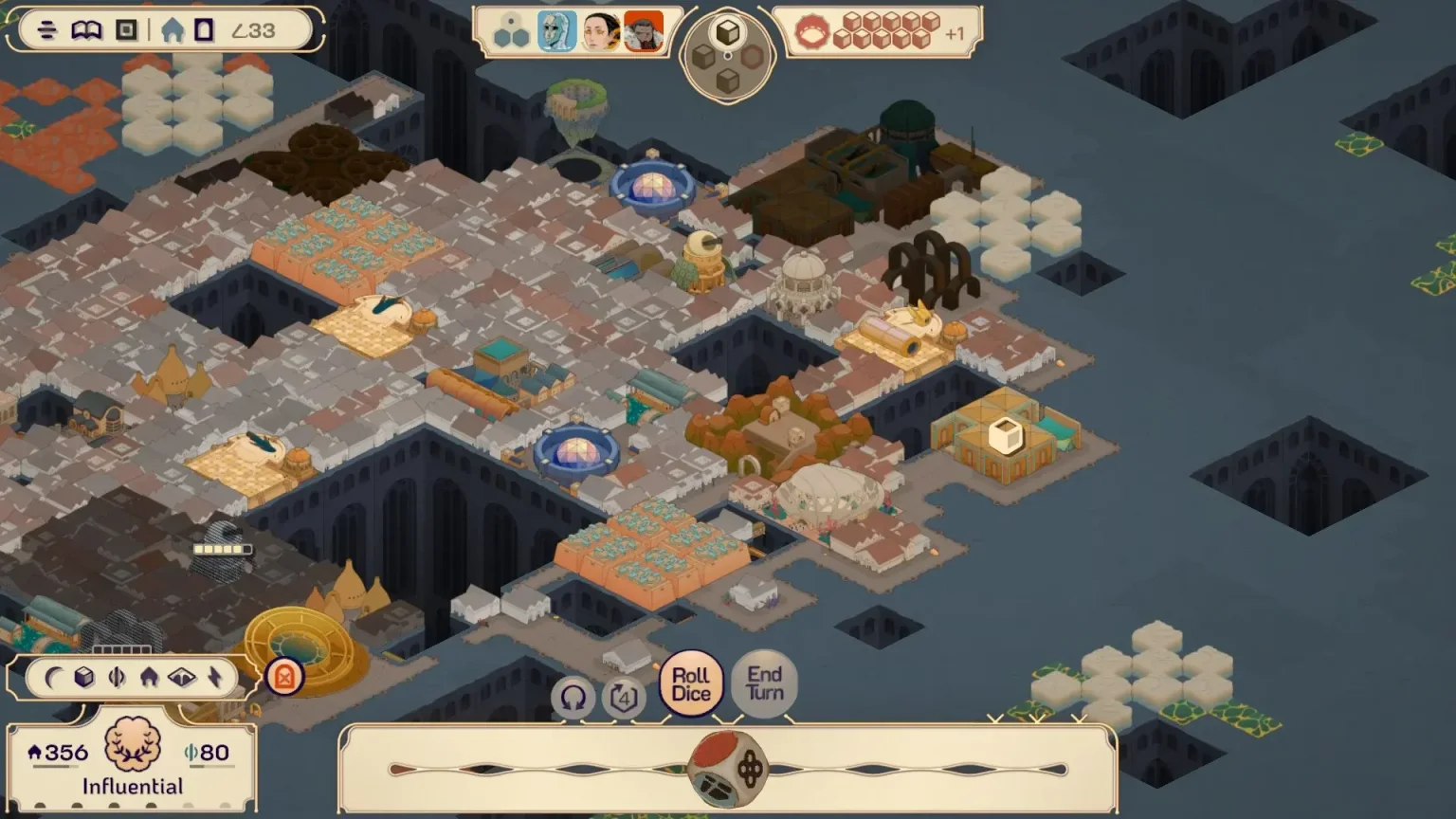
Starting a new session in Amberspire is an overwhelming and exploratory process, typical of the genre’s complexity. The primary objective is to lead a forgotten, backwater settlement toward a Golden Age by expanding its population and influence across various architectural tiers. The setting is unique – a giant tomb-moon where the city is anchored around a massive “maw” in the earth. Expansion requires constructing specialized resource-extraction buildings to trade for influence. These resources range from standard materials like brick and metal to esoteric substances like “void” and “horizon.” Notably, players cannot manually place or remove residents, as they tend to cluster around specific hubs like spaceports and landing pads, treating the population as a collective, autonomous organism.
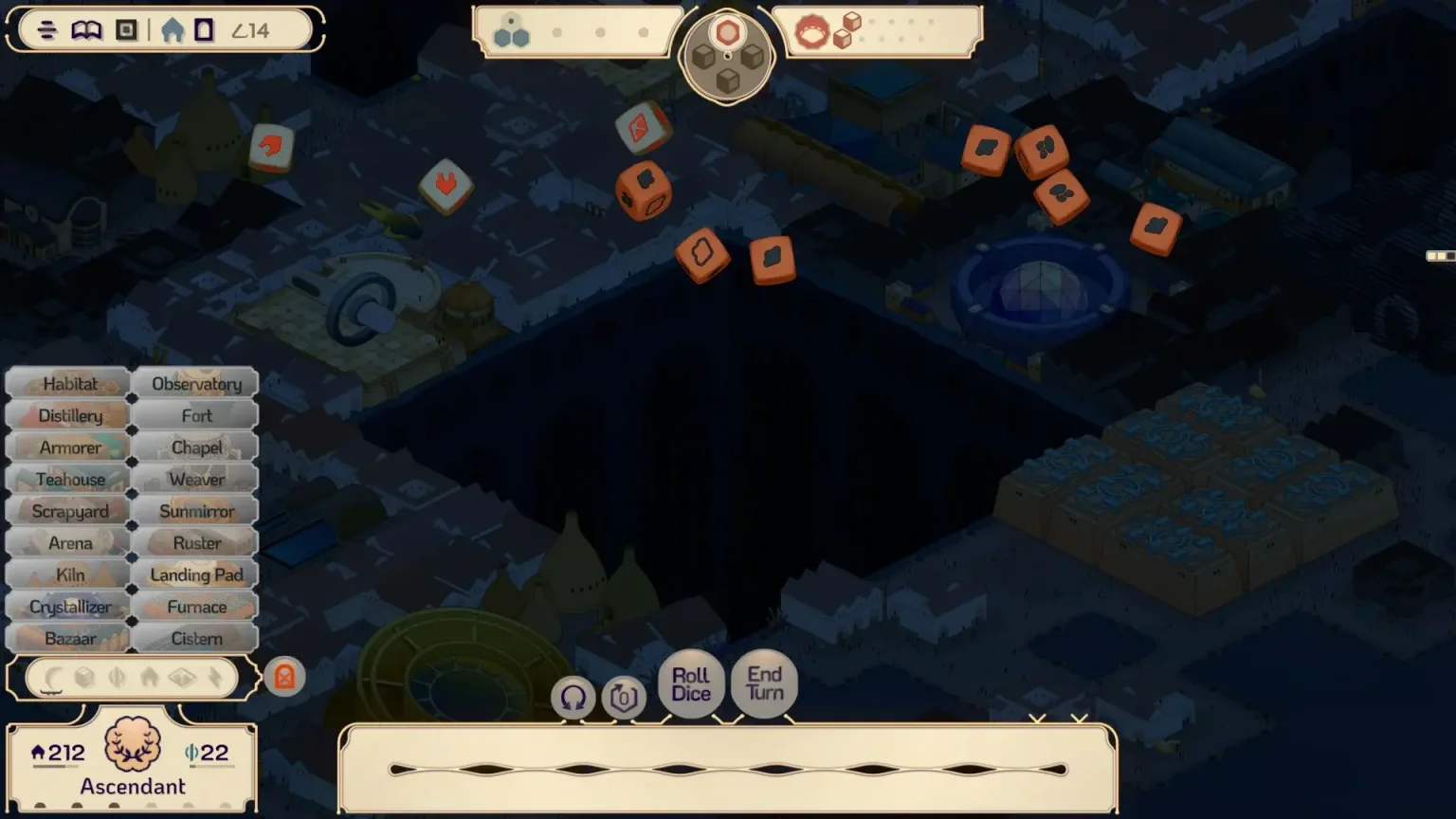
The core of the game’s tension lies in its weather system, which operates on a strict cycle. A single cycle grants the player three turns to act based on their rolls, followed immediately by a weather roll that serves as the computer’s retaliation. While a player might use up to six dice, the environment can accumulate up to ten weather dice, acting like a persistent debt collector that punishes the player’s progress. Beyond the basic weather, there are instability dice that directly threaten buildings and residents. The system creates a feeling of karma, where the moon’s base weather level prevents players from simply terraforming the landscape without facing a natural backlash – because on this moon, the weather is eternal.
While rust was once considered the primary antagonist for its ability to destabilize the ground and swallow entire districts, the fog has proven to be a much more formidable foe. During the “fog season,” even the most calculated plans can fail if the city’s fogbreakers are offline, leading to the total disintegration of urban quarters in the dark. Furthermore, the local “grass” acts as a multiplier for pain; building within its reach significantly increases the number of weather dice the player must face. This ecological hostility forces a total re-evaluation of one’s relationship with the environment, turning simple expansion into a high-stakes gamble against nature.
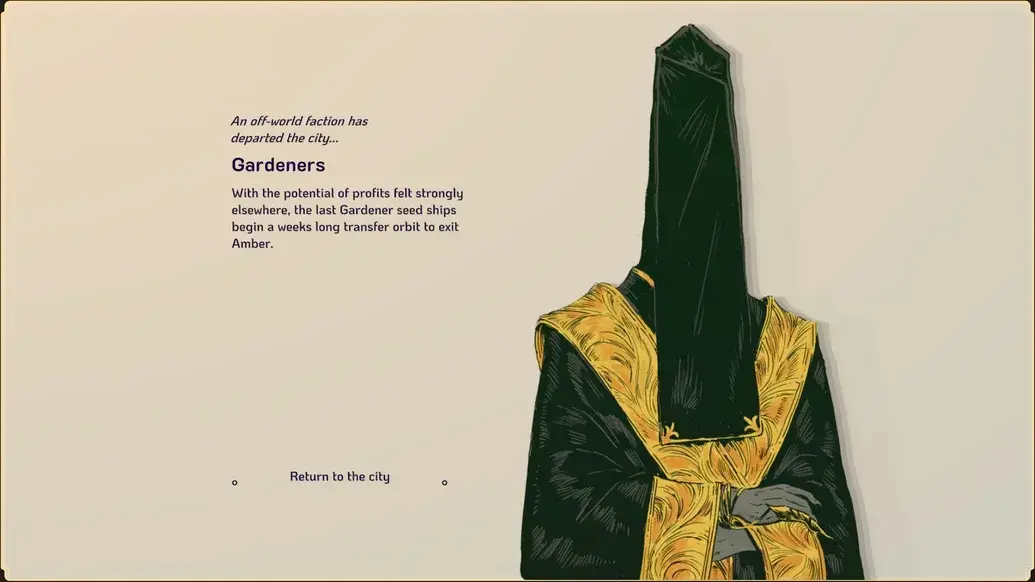
The game also integrates a faction and event system, though it currently stands as the least consistent element of the experience. Events are triggered by specific dice and can scale from localized apartment fires to massive, moon-wide crises. Up to three factions – such as the mysterious “Gardeners” who specialize in cosmic eugenics – can establish a presence in the city. Relationships with these groups are determined by dice, providing bonuses or penalties like extra rerolls or expanded dice slots. These factions add flavor to the world, such as the Coral Monarch, who may panic when a mechanical building accurately calculates its true size, forcing the player to choose between spending influence or risking a roll.
Despite the depth of the world-building, the event system’s unpredictability can occasionally lead to frustration. Factions sometimes remain neutral and passive for the duration of a game, failing to impact the gameplay loop in a meaningful way. There are instances where a faction might abandon the city during a crisis only to return a few turns later as if nothing had happened. This lack of narrative momentum suggests that pure reliance on dice rolls doesn’t always sustain the necessary tension for a developing story. While the mausoleum backdrop provides a haunting atmosphere, the promise of historical depth through these events often feels like it hasn’t been fully realized.
As the urban sprawl becomes denser and the encroaching fog and grass limit expansion, the game begins to mirror real-world ecological anxieties. It brings to mind the “shining illusion” of real estate markets facing climate crises, where expansion continues despite the looming threat of environmental collapse. In Amberspire, ecological disasters sometimes become a grim strategic tool; it is often more efficient to let a catastrophe clear a tile of residents so that a more useful building can be erected. However, such “urban renewal” comes with the heavy price of increased instability, creating a cycle where the player must decide whether to wait for fate or force a destructive change.
The Mediterranean-inspired curves and earth-toned architecture of the game draw a direct line to Arcosanti, the experimental “arcology” project in the Arizona desert. Just as Paolo Soleri envisioned a radical, self-sufficient community that eventually faded into obscurity, Amberspire presents a world full of grand ideas about the intersection of ecology and architecture. This vision is supported by the developers’ public logs, which function much like the transparent timelines used in modern urban planning projects in cities like Singapore. These logs provide essential context for the public and stakeholders, framing the game’s development as an ongoing dialogue about the future of urban spaces.
For players accustomed to the rigid, controlling nature of traditional 4X strategies like Civilization, Amberspire acts as a form of psychological reconditioning. The game’s subtle shifts force a rethink of one’s expectations: instead of dominating the map, the player must learn to live within the constraints of the planet. It poses difficult questions about whether growth can ever truly be balanced with a world’s needs. By removing direct control over resident placement, the game challenges the “psychopathic controller” mindset that many strategy fans have developed over the years, turning the act of playing into a process of self-reflection on how we perceive and inhabit space.
It takes time to fully appreciate Amberspire, but its fascinating ideas keep players coming back even when the mechanics feel incomplete. The game is designed to be experienced in reasonable, self-contained sessions, allowing a player to witness the rise and fall of a civilization in a single sitting if the dice are favorable. It is a beautiful exploration of a genre typically focused on extraction, offering a solitary tabletop experience that encourages meditation on the conflict between urban desire and environmental necessity. While it functions as a fever dream of the Renaissance era, the heavy reliance on luck can sometimes lead to periods of stagnation where the imagination must fill the gaps.
In the final stages, a city might find itself completely besieged by creeping fields of grass, with the player desperately trying to convince residents to stay in the hopes of a lucky roll. The game resists the “divine” zoomed-out view, forcing the player to stay close to the interconnected networks of buildings and the landscape that is actively trying to erase them. Eventually, when the weather and instability dice reach overwhelming numbers, the player must accept that entropy cannot – and should not – be defeated. When this version of Amberspire finally falls to the rust and the fog, the competition ends, and the city prepares to begin its cycle once more.