
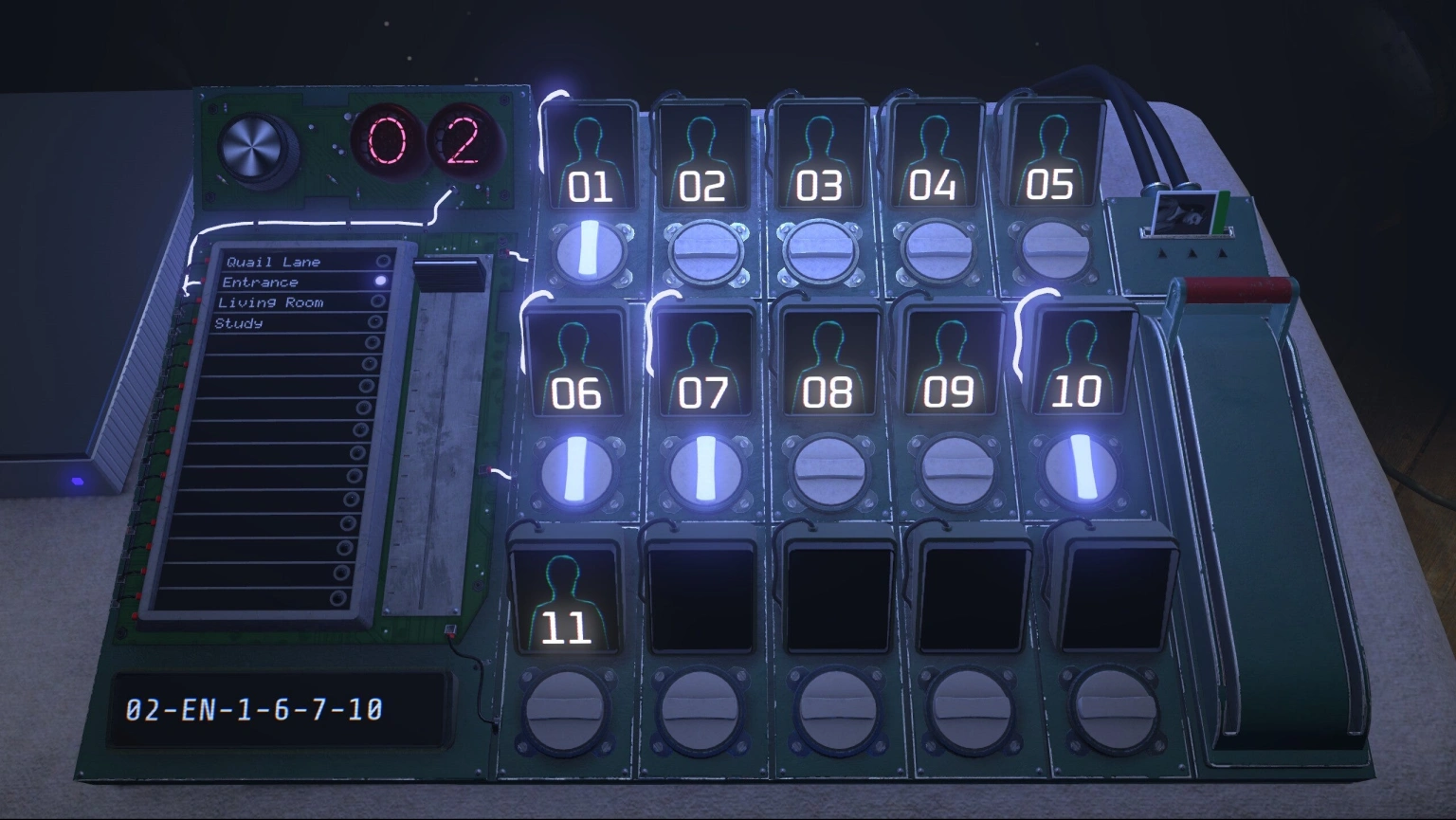
At the heart of The Incident at Galley House sits a mechanical enigma that players will spend countless hours manipulating – a chunky, wonderfully tactile device that feels like a cross between an audio mixing desk, a paranormal device, and a complex game of Guess Who. Cluttered with clicky dials, tactile buttons, and a prominent mechanical lever, the contraption whirs into life like a haunted slot machine whenever a correct deduction is made, rewarding the player with vivid psychic visions.
This physical apparatus represents one of the most striking overhauls introduced in this elaborate remake of Type Help, the critically acclaimed mystery game created by William Rous and endorsed by Inkle. In its original free release, Type Help invited players on a moody, low-fi journey through an old computer hard drive, presenting an abandoned murder investigation filled with loss and creeping paranoia strictly through command-line text interfaces. Players had to navigate annotated transcripts from a single night in 1936, relying purely on text indexing to unravel the identity and actions of everyone involved.
Developer Evil Trout – the studio behind last year’s celebrated detective hit The Roottrees are Dead – takes a radically different approach with The Incident at Galley House, trading the original’s stark minimalism for maximalist flair and replacing grounded computer realism with a blend of spooky tech-magic. Determining which version reigns supreme is largely a matter of taste, but Evil Trout’s reimagining is indisputably more accessible, skillfully converting intimidating text systems into an inviting interface.
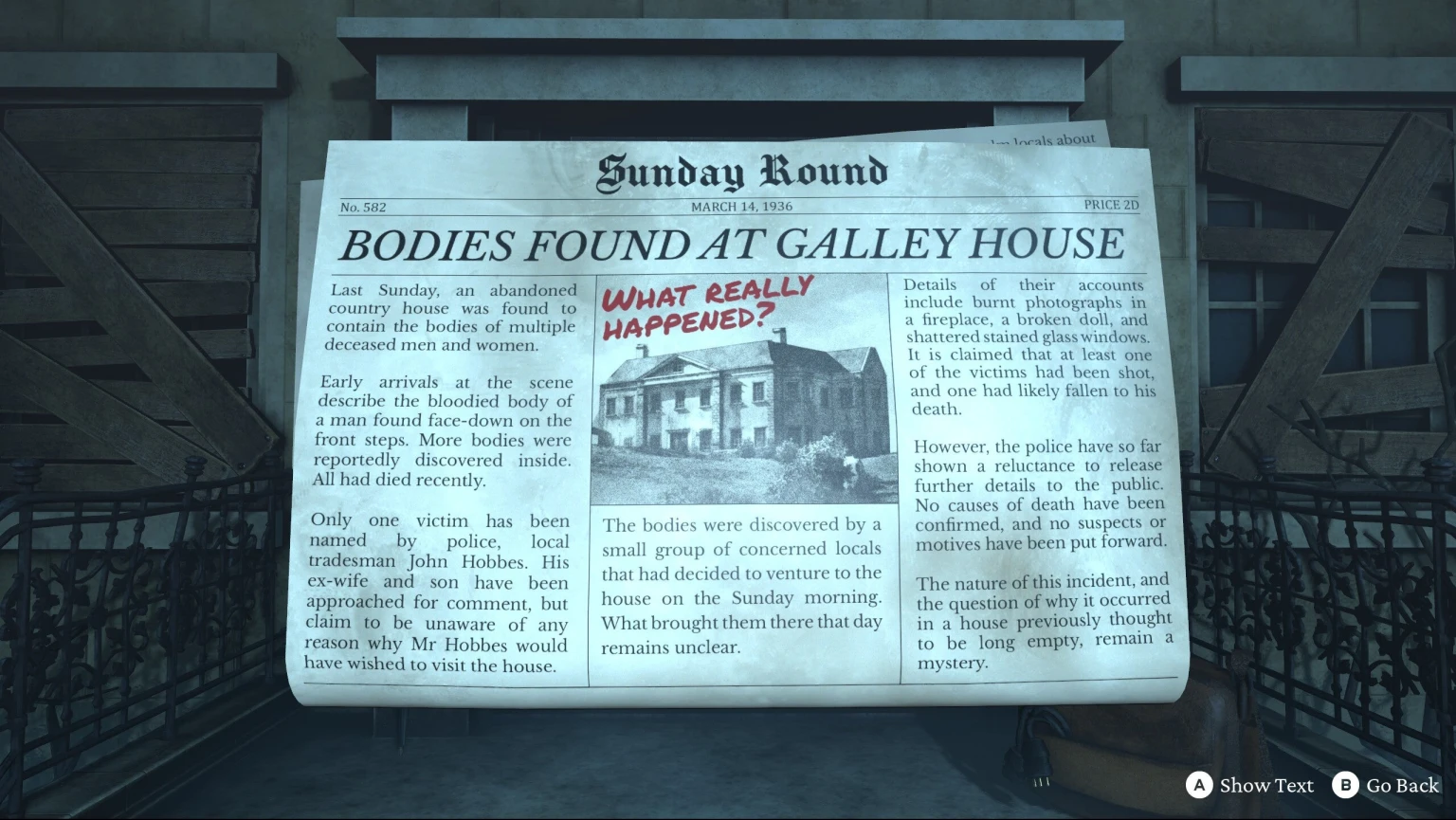
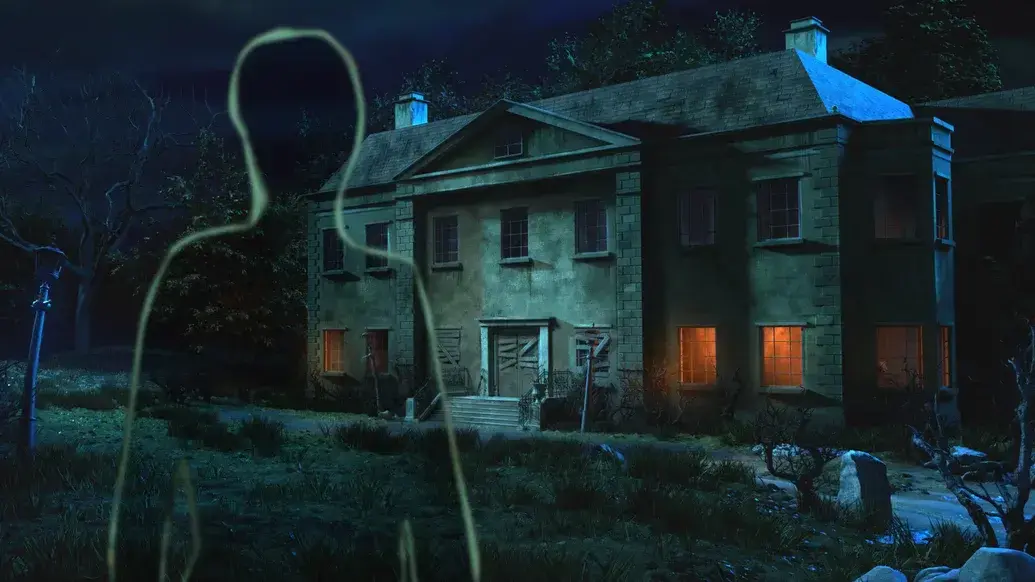
The underlying story centers on a gruesome tragedy: eleven bodies were discovered at Galley House, with ten of the victims remaining completely unidentified years later. Moving the player’s perspective closer to the modern day, the game frames its investigation around the “seance machine,” an abstract mechanical contrivance designed to explain why historical text transcripts now play out with full audio, voice acting, and visual scenes. While twiddling imaginary dials to trigger psychic visions creates a slight emotional distance compared to typing on a virtual terminal, the developer offsets this disconnect through immense polish in other areas.
Underneath its new coat of paint, the core experience remains faithful to the original, relying on identical transcript data and database reverse-engineering. The tragic events of 1936 are mapped across a 24-hour timeline divided into roughly one-hour increments. By carefully analyzing available records, players deduce where Galley House’s guests were located throughout the day and with whom they interacted. This information is then translated into numerical codes and entered into the machine via physical switches – yielding a comical electronic fart sound for incorrect answers or unlocking a fresh scene when solved correctly.
Despite the straight-forward mechanism, Galley House constantly challenges players through clever obfuscation. While less restrictive than reading pure text – offering visual context for scene locations and distinct voice acting – the game initially conceals character names, faces, relationships, and underlying motives. Early progression relies heavily on identifying figures through subtle name drops, matching faces to identities, and continually re-evaluating past recordings as new context emerges.
Unraveling these interconnected clues yields deep satisfaction, balancing obvious connections against trickier trial-and-error puzzles. The game lightens the tedious note-taking required by the original by offering modern visual management tools, allowing detectives to cross-reference data, annotate details, and jump across timelines without getting lost in historical noise. Though investigation work slows down somewhat during the middle stretch when tracking individual schedules, the momentum quickly recovers thanks to dramatic narrative twists and a refined late-game structure.
Storywise, the experience plays out as a rich period piece, blending elements of Downton Abbey with classic Agatha Christie murder mysteries. The dialogue-heavy script takes its time establishing character relationships and narrative stakes, prompting Evil Trout to translate these extensive text passages into an accessible multimedia format.
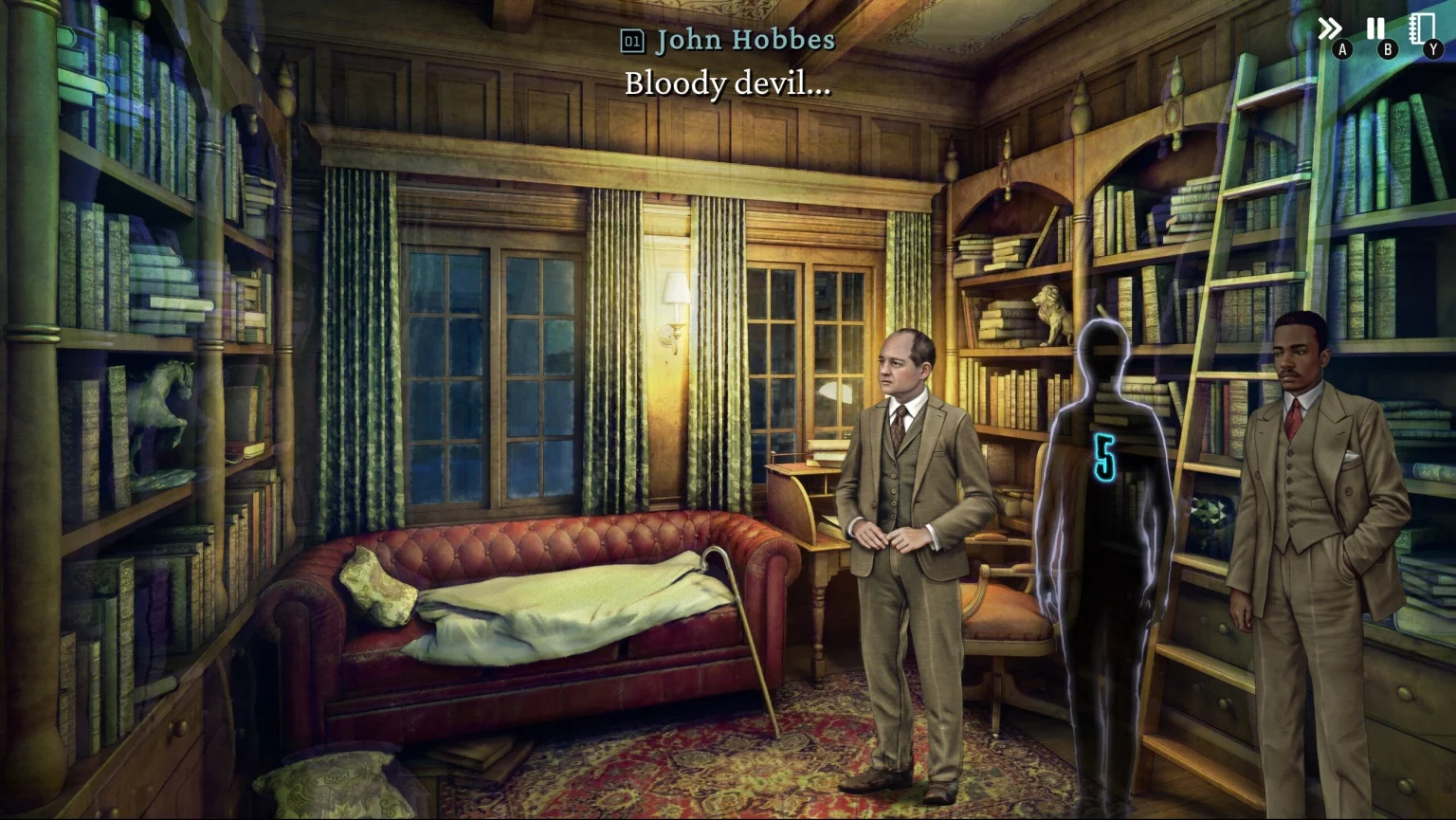
Visually, the game utilizes 3D rendering for its central paranormal machine, while historical scenes unfold through static 2D character portraits set against detailed backdrops. While functional and occasionally striking, the visual presentation suffers from noticeable limitations. Figures static-teleport between positions without movement animations, remain standing during high-drama moments, or stand upright while others mourn their deaths. Furthermore, the game’s character-swapping mechanics cause inactive characters to turn into dark silhouettes whenever they step away from an active spot.
Where the visuals fall short, the audio design delivers an exceptional performance that fully justifies the remake. Galley House builds an immersive, doomed world through atmospheric soundscapes – featuring squelching tires in mud, torrential rain, crackling fires, and delicate tea cups – alongside a dynamic synth soundtrack that shifts from subtle atmosphere to jarring horror. The stellar voice cast starts with traditional period-drama stiffness before delivering intensely emotional performances as the story’s tragic reality comes into focus.
True to classic mystery storytelling, the vital clues are planted right from the start, prompting players to question why the victims were never identified and why Galley House seemed deserted. The narrative functions like a complex magic trick, maintaining structural coherence despite its fragmented delivery while excelling as a gripping thriller, period drama, and chilling ghost story. Although a slightly over-explanatory coda briefly stumbles, Evil Trout proves that adding more can indeed elevate an experience, turning one of last year’s standout mysteries into a premier adventure once again.